Best Golf Rangefinders 2026 - Our Top 12 Picks Tested And Reviewed
A rangefinder can make a significant difference to your golf game and we have collated our favorite models to help you choose


Golf is really hard, so equipping yourself with one of the best golf rangefinders is a quick and easy way to make it that little bit easier. Knowing your exact yardage for an approach shot is vital sticking it close, so equipping yourself with a reliable distance measuring device is one of the best ways to help your game. Anything that makes life a little easier for us out on the course should be welcomed with open arms so help comes in many forms - it might be a pair of the best shoes to keep us comfortable on that four hour walk, or perhaps one of the best lightweight golf bags to make carrying easier.
Rangefinders used to be pretty pricey when they first arrived on the scene, but now more budget options than ever have appeared meaning they aren't even expensive if all you are looking for is something that does the basics.
If you want something more high end with various bells and whistles, those are available too. In fact, when it comes to rangefinder models golfers are spoilt for choice and that can make choosing quite difficult. Fear not we're here to help. In this guide, we have tested and taken a look at the best. Whether it's the best budget rangefinders, or the best golf rangefinders with slope, we have you covered!

Conor joined Golf Monthly in late 2024 after graduating with a Masters degree in Sports Journalism from St Mary's University and heads up reviews for rangefinders, GPS and golf watches. Conor is lucky to have Royal County Down as his home golf course, beginning to play the game at the age of four, later becoming a caddy at RCD at just eleven years old and doing so for over 12 years. Playing to a 7 handicap, you’ll likely find him on the range trying (and failing) to hit a Shane Lowry-esque stinger that helped him win The Open Championship at Royal Portrush.
The Quick List

The Tour Hybrid laser gives you the best of both worlds: pinpoint accuracy to the flag and instant GPS yardages to the green. As you lock onto the pin, you’ll see the front, center, and back distances right on the screen - a game-changer of a feature.

The Inesis Golf 900 is the ultimate budget-friendly laser, delivering the same precise yardages as the leading brands but at a much more accessible price. Featuring a compact design, slope functionality and a trusty carry case, there is little to fault here.

Shot Scope has truly leveled up with the Pro L5, featuring their first ever ultra-clear OLED screen. It makes picking out the flag effortless, providing a much brighter view than previous models like the Pro L2.

Carrying on the success of the V6 Shift, the new look and color scheme on the V7 are fantastic, as is the bright OLED display which makes it easy to successfully shoot your target.

While it’s a significant investment, the unique full hole map overlay on the Z82 makes it worth the cost. It’s the only device that puts a detailed GPS map right inside your viewfinder, letting you plan layups and avoid hazards with precision.

If you’re looking for a rangefinder that’s smarter than the average laser, we'd recommend the Precision Pro Titan. Its MySlope technology is impressive, while the Find My Precision Pro feature ensures you’ll never lose your laser on the course.
Load the next 6 products

For golfers who want a high-performance laser that stands out from the crowd without breaking the bank, the Pinned Prism+ is a great balance of fashion and function, available in a wide range of colors to allow you to express yourself a bit.

The Captain Pro is the premier laser in Blue Tees new affordable ecosystem and includes features that you'd expect on a device more than double the price.

Its extremely compact body doesn’t take up much room in the bag and provides a comfortable hold, while the clarity of the screen is excellent. The Coolshot 20i has all of the features and range you could ever need.

As Bushnell’s smallest laser ever, the A1-Slope successfully shrinks reliable accuracy into a palm-sized chassis that fits comfortably in a pocket mid-round. Although other Bushnell rangefinders have clearer displays, the versatility of the A1-Slope makes up for it.

If you want the most advanced laser in the game, the Pro X3+ is it. The big story here is the clever new wind feature, which pulls live data from the Bushnell app to show you exactly how strong the wind is and from where it is blowing.

The Shot Scope PRO X is a reliable, high-utility rangefinder that ticks the on-course essential boxes while introducing a level of personalization we've been urging brands to tap in to for years.
Best Golf Rangefinders 2026
Top pick

The Tour Hybrid brings together the best features of Bushnell’s top rangefinders with a built-in GPS that shows yardages to the front, middle, and back of the green directly in the viewfinder. This innovative feature is sure to set a new standard in the rangefinder marketplace, giving golfers exactly the information they need before each shot to choose the right club, improve approach accuracy, and potentially lower scores. Not only is the Tour Hybrid the best Bushnell rangefinder that we've ever tested, it also takes the crown of being our top pick for this guide.
Players no longer have to chose between one of the best golf GPS devices or a rangefinder as the Tour Hybrid combines the best of both perfectly whilst keeping things simple and easy to use.Knowing precise yardages is especially valuable on courses without pin sheets or color-coded flags, giving players confidence in their club selection and approach shots.
Despite all the bells and whistles, its worth praising the fact that the Bushnell Tour Hybrid is remarkably intuitive, offering a seamless user experience that avoids the faff of over-complicated setups. It eliminates the need for third-party apps or manual course selection - instead, its internal GPS activates instantly to identify your location with impressive speed. We really do believe this device represents a significant shift in rangefinder design in relation to features and could well serve as the blueprint that will likely force competitors to rethink their own hybrid strategies for years to come.
- Read our full Bushnell Tour Hybrid Rangefinder Review
Best budget
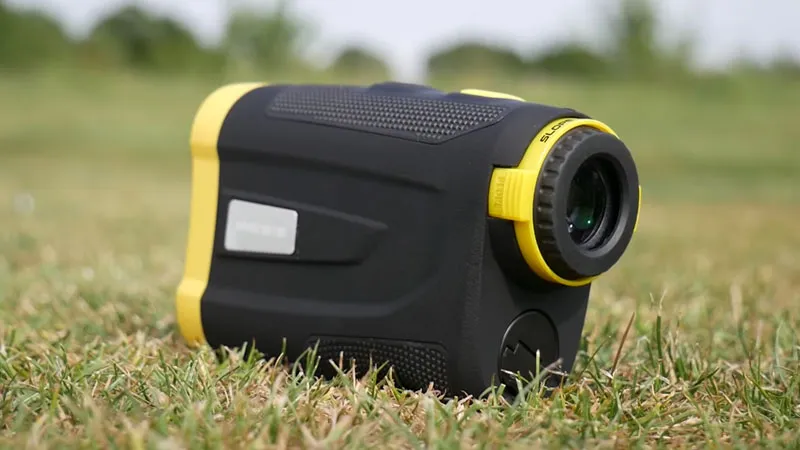
Budget rangefinders used to be a waste of time years ago, but now the vast majority of golfers seem to be shopping nearer the bottom end of the price scale and given some of the best budget golf rangefinders we've tested in recent years, it's understandable as to why. Inesis are a fairly new name in the golf market but we are big fans of their gear due to the excellent combination of quality and value on offer. The 900 Rangefinder is a perfect example of this as it offers excellent value for money. It sits towards the bottom end of the price scale, but the performance belies that and I thought the overall value for money on offer was excellent.
In testing I found that it performed valiantly against the likes of the Bushnell Tour V5 Shift, as the 6x magnification gave me a clear view when looking through the viewfinder. The 900 is very user friendly and I found that the weight and sturdiness really allowed it to hold up well in the strongest conditions.
The 900 also uses a First Target Priority system to rapidly pinpoint the flagstick from background clutter like tress and bushes, with each successful lock confirmed by a subtle vibration in your hands. During our testing it proved extremely accurate, maintaining a +/- 1-yard accuracy standard, while the integrated Slope Compensation switch provided crucial adjustments for elevation changes and is a feature rarely seen in devices at this side of the price scale. All in all, these features work toward cementing the 900 as a standout value for golfers seeking professional-grade features on a budget.
- Read our full Inesis Golf 900 Laser Rangefinder Review
Best clarity

Shot Scope's Pro L5 marks a turning point for the brand, addressing the primary feedback from earlier models by introducing their first-ever ultra-clear OLED display. We have enjoyed Shot Scope products in the past but always felt that the display wasn't as clear as rival devices - until now. While the Pro X (launched in early 2025) focused on customization, the L5 prioritizes premium visual performance at an accessible price point.
OLED technology is increasingly common among top-tier golf rangefinders, with models such as the Blue Tees Series 4 Ultra and Zoom OLED Pro offering brighter, clearer views through the lens. When precision and clarity are crucial, having the sharpest possible view on every shot can make all the difference to give you the confidence before a shot that you have shot the correct yardage.
Priced around the £200/$220 mark depending on where you shop, the Pro L5 offers impressive value for money. Few rangefinders combine an OLED display, 7x magnification, and rapid distance readings as effectively as this model. It’s perfect for golfers of any skill level seeking a feature-rich, easy-to-use rangefinder without overspending and sits right on the verge of what we'd consider when ranking the best budget golf rangefinders.
- Read our full Shot Scope Pro L5 Rangefinder review
Best display

The V7 Shift builds upon the immense popularity of its predecessor, the V6, by offering thoughtful, quality-of-life improvements rather than a complete redesign. A new striking new black and orange aesthetic with premium metal details, paired with a robust, perfectly weighted, and completely waterproof build. Looking through the lens reveals a brilliant OLED display that clearly separates standard yardages in orange and slope-adjusted distances in green for effortless reading as well as giving you a beautifully clear view of the challenge ahead of you.
In addition to the sparkling optics, updated features like Pinseeker and Visual Jolt work together to deliver a vibrating pulse and a flashing orange ring to guarantee you have accurately locked onto the pin. Bushnell has also introduced a convenient yardage recall button, alongside an innovative collaboration with Foresight Sports that can display personalized club recommendations directly on the screen.
Priced at around $400, the Tour V7 Shift isn't cheap but firmly establishes itself as one of the best mid-tier rangefinders available. However, I'd argue that spending an extra $100 for the GPS-equipped Bushnell Tour Hybrid might be a worthwhile upgrade for some who want yardages to the front, back and middle of the green.
- Read our full Bushnell Tour V7 Shift Rangefinder Review
Best for features
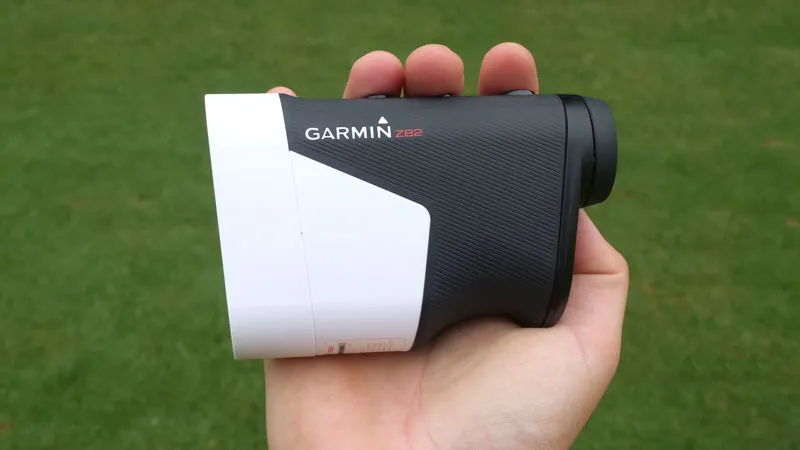
If you like your bells and whistles when it comes to golf gadgets, look no further than this offering from the highly respected Garmin brand. So much more than a laser rangefinder, when it comes to innovative features the Garmin Approach Z82 is out on its own. It comes packed with much of the functionality you'll find on the best Garmin golf watches, meaning this is much more than a 'point and shoot' laser. It actually combines the best GPS technology with the capabilities of a laser, giving you the best of both worlds.
Using the Garmin Z82 is like having a digital yardage book built into your lens. The viewfinder features a split-screen effect with the right side shows your actual view of the course at 6x magnification and the left side displaying a vibrant 2D map of the hole which is easy to digest and highlights hazards and layup points you might not even be able to see with your eyes. Once you’ve surveyed the layout, just point the laser at the flag and the device will buzz to confirm your distance, just like a standard rangefinder, but with A LOT more context.
One of our favorite tools on the Z82 is the 'Laser Range Arc' which is a small red arc that appears once you zap the flag successfully, showing you on the 2D hole map exactly where that distance falls on the green so you’ll always know if the pin is front, middle, or back - a particularly useful feature for those who play a lot of different golf courses rather than their home course over and over again. It works for hazards, too, showing you everything else in play at that specific range as well as from the tee box with 'Driver Arc', based on your personal average distance, helping you spot trouble before your shot.
- Read our full Garmin Approach Z82 Laser Rangefinder Review
Most cutting edge

Gone are the days in which rangefinders are simply small telescopes that pump out a number when you aim at your target and press a button - now the best devices come with some cutting edge technology that can take your pre-shot planning to another level. The Titan Elite from Precision Pro integrates with the Precision Pro Golf app to provide the user access to a multitude of cool features. One of these features is a slope mode that can actually sync up with MySlope to personalize the slope measurement to your particular ball flight. This is really high end tech and this is a truly unique rangefinder that has cutting edge technology at its core.
Its Visual Target Lock provides a lag-free pulse and a unique 'ripple' effect on the reticle, making it dead easy to know when you've nailed the flag and not the trees or bushes behind the green, an issue that has plagued many rangefinders we've tested over the years. Though it sticks to the standard 6x magnification, the crispness of the display and premium aluminum shell make it feel like a pro-level tool.
This next feature could be very useful to those certain people who seem to lose things all the time, be that their keys, phone or even rangefinder. If you're a bit forgetful like myself, you'll be grateful for the Find My Precision Pro feature which, you guessed it, helps you find your device if you drop it out on the course. This is invaluable as it will save you a lot of time retracing your steps and will lead you right to it. On that note, the connection to the app itself is probably the most simple we have experienced on a device of this type.
- Read our full Precision Pro Titan Elite Laser Rangefinder Review
Best for style

Everything about this device feels modern and, frankly, pretty cool. If it were a person it would be a cool 20-something year old who is really good at surfing (and let's you know about it). The rangefinder market has become very crowded in recent years so brands have to put a lot of effort into making their product unique - Pinned have done just that, and done it brilliantly.
There are plenty of reasons to love the Pinned Prism+, but its standout design is the best place to start. It breaks the mold with seven color options, like my top pick and favorite color of green, along with navy, red, pink, and more, making it the most stylish rangefinder you can add to your bag. Even the font choice feels fresh and high-end. In the hand, the device has a satisfying, premium weight, and the included magnetic-closure case is genuinely one of the best on the market (something I value highly with rangefinders), offering quick access and a fit that matches your chosen color perfectly.
The Pinned Prism+ is more than just a pretty face - in fact it’s a very high-performance device without the massive price tag. The 4K OLED screen is a standout and features bright red graphics that are easy to read, even in direct sunlight. With 7x magnification (most devices in this guide only have x6) and a reliable slope mode, it gives you every bit of data you need on the course. You won't find a 'scan mode' here which is a little disappointing, but for around $200, its combination of top-tier optics and modern, stylish look offers some of the best value on the market.
- Read our full Pinned Prism+ Rangefinder Review
Best unique feature

No brand is making more of a splash in 2026 than Blue Tees courtesy of their new ecosystem which incorporates this laser, a watch, launch monitor and GPS speaker.
The Blue Tees Captain Pro is an ambitious, feature-packed rangefinder designed to disrupt the mid-tier market by offering premium golf technology without the traditional sky-high price tag. Wrapped in a robust, IP67 dust and waterproof rubber exterior, it boasts a crystal-clear 7x magnification OLED display coupled with a reassuring flag lock vibration to dial in your distances, even when battling background foliage.
Beyond its core capabilities, the Captain Pro distinguishes itself through its 'smart' features when paired with the Blue Tees app. This digital integration provides front, center, and back GPS yardages, aerial hole views, and green heat maps, while an available analytics subscription unlocks advanced shot tracking and club recommendations. It means all your golf data can be stored in one place
Priced at a highly competitive $299, this is a ridiculous level of value for a device that blends a top-tier laser with advanced GPS capabilities. The sheer volume of features provided coupled with the ecosystem you can build by combining it with other Blue Tees products make it an exceptional investment. By successfully bridging the gap between basic budget models and ultra-expensive premium devices, the Captain pro is one of the most comprehensive and affordable 'smart' rangefinders on the market.
- Read our full Blue Tees Captain Pro Rangefinder Review
Best lightweight

Gone are the days of bulky, heavy rangefinders that weigh down your bag. Nikon's Coolshot 20i GIII is easily one of the most compact units we’ve ever tested - barely larger than a credit card and weighs next to nothing, which is why it earns our label of 'Best Lightweight' device. Whether you're a traditional walker like the majority of the team here at Golf Monthly or a cart-based player who can't be bothered with the bulky devices, the 20i GIII offers the perfect balance of portability and pinpoint Nikon precision.
We really enjoyed putting the Nikon 20i GIII through its paces. The standout feature is definitely the display, which is maybe unsurprising given the brand we're talking about here and their history of making some of the best cameras you can get your hands on. Nikon’s multilayer coating makes the display incredibly sharp, so the flag pops out clearly whether it’s a bright midday round or a late sunset finish. The Locked On Quake vibration gives you a quick buzz the moment you lock on to your target, giving you total peace of mind that your yardage is spot-on and is another nice touch.
Weighing just 4.5oz and the size of a smartphone, the 20i GIII is designed to disappear into your pocket or golf bag between shots. It sits naturally in your palm, and takes up very little room wherever you choose to store it, proving that you don’t need a chunky device to get pro-level accuracy.
- Read our full Nikon Coolshot 20i GIII Rangefinder Review
Most compact

The A1 is Bushnell’s smallest rangefinder in the current lineup. At first glance, I worried it might look a bit basic once I took it out of the box, but holding it in-hand revealed a sturdy, well-built device. Its compact size doesn’t compromise performance - yardage readings are both fast and accurate, whether slope is enabled or not. While the display could be a touch clearer (I struggled a little when there was shrubbery behind the green), the JOLT vibrations provide reliable tactile feedback when locking onto the flag.
It features an effortless slope toggle and a 350-yard flag-lock range, making it versatile enough for any shot you're about to hit (unless you're a world long drive champion). Plus, with an IPX6 weather-resistant rating its ready for any elements that could be thrown at you on the course and even in those conditions it delivers consistent, lightning-fast yardages. Despite the lack of size, it provides sufficient grip whether your hands are damp from the rain or from sweat on a hot summers day.
The BITE magnetic attachment, seen on most Bushnell devices, is a feature worth praising in terms of how much convienience it will provide as well. This is paired with an exceptionally robust battery life, resulting in a highly dependable and versatile rangefinder that sets the standard for compact rangefinders in 2026.
- Read our full Bushnell A1-Slope Rangefinder Review
Best for accuracy

The Bushnell Pro X3 laser on the ground
If price wasn't a factor in determining these labels, the Pro V3+ would likely be our top pick as it really does set the standard for how good a rangefinder can be. A seriously impressive model, this rangefinder factors in elements like distance, slope, temperature and barometric pressure (elevation), ensuring you can get the most accurate yardages every single time.
When I tested the brand-new wind speed and direction feature, I did find it was a bit of a faff to calibrate it properly and pair correctly with the app, but that doesn't take away from the superb performance on offer from the X3+.
It's packed with the same technology you'd find within other top Bushnell rangefinders and, when paired with the Bushnell Golf app, you are able to save stats and receive relevant course information. Additionally, it's waterproof and has a solid weight to it, making it ideal for golfers with shaky hands as it will provide good stability, especially in windy conditions.
- Read our full Bushnell Pro X3+ Laser Rangefinder Review
Best customization

A reasonably-priced rangefinder that will appeal to a wide range of players. It has slope-adjusted distances, which can be easily turned on and off when you're playing in competition, a built-in magnet for use on a ride-on cart, and target lock vibration. Coupled with the vibration, you can zap the pin and get your accurate yardage incredibly quickly with the Pro X, which is exactly what we want from a top-level rangefinder.
The unique selling point of this device is the customization options - there are a range of stock options to choose from like country flags and other graphic designs. There is also the option to order in bulk and get a personalized design on there - we got the Golf Monthly logo on ours. It's a nice differentiation from the often dull, grey rangefinders that dominate the market.
The display isn't the brightest when compared to other options on this list or sister options from the same brand like Shot Scope's Pro ZR rangefinder which features a much brighter display - The Pro X lacks a little firepower in this particular area, but this is the only serious criticism of the device we could make.
- Read our full Shot Scope Pro X Rangefinder Review
Specifications table
Model | Range | Magnification | Protection | Battery life |
Bushnell Tour Hybrid Rangefinder | 1,300 yards | 6x | IPX6 | Replaceable CR-123 Battery |
Inesis Golf 900 Laser Rangefinder | 5-1300 yards | 6x | Certified IPX2 | 5000 actuations |
Shot Scope Pro L5 Rangefinder | 1300 yards | 7x | Water resistant | 5,800 measuring times – replaceable battery |
Bushnell Tour V7 Shift Rangefinder | 1300 yards | 6x | IPX6 | USB-C Rechargeable |
Garmin Approach Z82 Rangefinder | 450 yards (flag) | 6x | IPX7 Waterproof | 15 hours |
Precision Pro Titan Elite Laser Rangefinder | 999 yards | 6x | IP67 Dust/Waterproof | USB-C Rechargeable |
Pinned Prism+ Rangefinder | 1000 yards | 7x | Water resistant | 70 rounds |
Blue Tees Captain Pro Rangefinder | 1200 yards | 6x | IP67 Dust + waterproof | USB-C Rechargeable |
Nikon Coolshot 20i GIII Rangefinder | 800 yards | 6x | IPX4 water-resistant | Approximately 10,000 times |
Bushnell A1 Slope Rangefinder | 350+ yards | 6x | IPX6 weather-resistant | 12+ hours |
Bushnell Pro X3+ Golf Rangefinder | 600+ yards | 7x | IPX7 waterproof | 40+ rounds |
Shot Scope Pro X Rangefinder | 800 yards | 6x | Water resistant case | 5,800 actuations |
How we test for the best golf rangefinders
At Golf Monthly, rangefinders undergo comprehensive on-course testing over multiple rounds to provide golfers with the most reliable, expert buying advice possible. Built on over a decade of reader trust, our reviews are conducted by passionate, experienced testers and remain entirely free from bias. Especially now that amateur golf is more popular and expensive than ever, we pride ourselves on delivering completely honest, unfiltered feedback based strictly on real-world performance.

Conor Keenan testing the Blue Tees Captain Pro Rangefinder
In terms of our laser reviews, they are headed up by Staff Writer Conor Keenan. As a former caddie at Royal County Down, Conor knows a thing or two about the best golf gadgets. With the helping hand of a few trusted colleagues including Deputy Editor Joel Tadman, Kick Point Podcast co-host Dan Parker and former Division One College player Sam De'Ath, the team deliver detailed, thorough reviews of the latest laser rangefinders to hit the market.
Due to the fact we test a lot of golf equipment, be that some of the best golf shoes, best golf drivers or even the latest golf gps - it means our testing team are spending a lot of time out on the golf course. If we are out on the course testing a product, it likely means we're also using a rangefinder to do so. This means rangefinders might just be the most thoroughly tested products out of all that we review. They are tested across multiple rounds of golf in different settings and in different conditions - we aim to use over around a dozen rounds to see how they truly perform.

Conor Keenan testing the Bushnell A1-Slope Rangefinder
We also focus in on specific selling points with each laser rangefinder and test out these features to see if they work - for example, if a device says it is waterproof then one of our brave members from the review team will tackle the elements to see how the rangefinder held up in the adverse conditions. We also put each rangefinder on the scales to see if they are as lightweight as the brand says they are!
For even more information, check out our piece on how Golf Monthly tests products.
How to choose the best golf rangefinder
Accuracy
Accuracy is the biggest factor when choosing a quality rangefinder. Relying on an unproven, ultra-budget model is a massive gamble that frequently leads to picking the wrong club.
Established, trustworthy brands like those featured in this guide are specifically engineered to provide consistent, pinpoint distances every time you look through the lens. Choosing a reputable name ensures repeatable accuracy that cheap alternatives cannot replicate.
Range/magnification
While a 1,000-yard range might look impressive on a spec sheet, golfers rarely ever need to measure a shot or hazard beyond 250 to 300 yards.
What actually matters on the course is magnification, which dictates how clearly you can see what is in front of you through the lens. A higher zoom level, like 6x or 7x, enlarges the target in your viewfinder, making it much easier for the device's laser to lock on and deliver a dependable number.
Display
A sharp, easy-to-read display is essential for quickly confirming your yardages in mere seconds. There are also several other models on this list that have good displays so be sure to have a read of our in-depth reviews as well.
Battery Life
Before you buy, check what powers the device - is it a disposable battery or a rechargeable one? Traditional battery-powered models are great because they last nearly an entire season and take seconds to swap out. Rechargeable rangefinders are becoming the new standard in 2026 and a quick USB-C charge can last you for 50 rounds or more, meaning you never have to hunt for a specialty battery again. Just keep an eye on the charge cycles for a quality rechargeable unit should last for years before the internal battery shows any sign of wear.
Slope
If you plan to play in competitive events, ensuring your rangefinder is tournament-legal is the most critical factor to consider before buying. According to USGA and R&A Rule 4.3, while standard distance-measuring devices are perfectly legal, utilizing slope-adjusted yardages during a competitive round remains a strict disqualification offense.
To avoid any unwanted drama on the course, we highly recommend choosing a model that features a highly visible physical slider or a bright external indicator light. These show your playing partners at a single glance that the slope function has been completely disabled.
Waterproofing
A great rangefinder should work just as well in a downpour as it does in the sun. However, don't be fooled by the labels for there is a huge difference between water-resistant and waterproof. Water-resistant models are fine for a light drizzle, but if you're a hardcore golfer who plays in the rain, you need a fully waterproof device. Look for the IPX7 gold standard found in the likes if the Garmin Approach Z82 or Precision Pro Titan, especially those golfers like the majority of the Golf Monthly team who play a lot in wet weather.
Convenience
You want a rangefinder that operates effortlessly, allowing you to grab the laser, get your yardage and slide it back into its pouch without disrupting your pre-shot routine or slowing down the pace of play.
Once you have narrowed down your shortlist, we highly recommend diving into our individual, in-depth product reviews. We pay close attention to how these devices perform in real-world conditions, giving you honest feedback on whether a model is user-friendly or if it is a hassle to live with.
Looks
For many golfers, the look of their laser isn't important at all, and that is completely fine. However, if you like to showcase a bit of personal style on the course, your rangefinder is a great accessory for doing just that.
Devices like the Pinned Prism+ are perfect examples of models that refuse to sacrifice form for function, offering top-tier performance wrapped in a sleek, eye-catching aesthetic.
Magnetic Mount
An increasing number of modern rangefinders come equipped with built-in magnetic mounts, allowing you to easily stick the device directly to the metal frame or roof pillar of a golf cart. However, whether you actually need a magnetic mount depends entirely on your individual playing habits. Personally, I very rarely take a cart, so this feature won't be as important to me as others. Weigh your typical style of play to decide if a built-in magnet is a must-have feature, and always double-check the product specifications to confirm it is included.
Budget
Be aware of how much you are willing to spend on a laser because there are good models at every price point these days. For example the Inesis 900 is one of the cheapest on this guide and we thought it offered excellent performance, whereas if you want to spend more and go towards the premium end of the spectrum, you can also do that with models like the Garmin Approach Z82.
Glossary
Slope
The slope feature accounts for elevation changes by delivering a slope-adjusted yardage alongside the raw distance, automatically reducing the yardage for downhill shots and increasing it for uphill targets to help you select the right club on uneven terrain. While this technology is incredibly useful for navigating hilly courses, it is strictly prohibited in tournament play, making a rangefinder with a physical on/off toggle essential if you intend to play in competition play.
Magnification
A rangefinder's magnification dictates how many times larger an object appears through the viewfinder compared to looking at it with the naked eye. For example, a device with 6x magnification makes your target look six times closer than its actual distance, allowing you to lock onto faraway objects with ease. Some models, like the Blue Tees Captain Pro, now offer x7 magnification, ensuring you get a crystal-clear, detailed view of what lies ahead.
Range
A rangefinder's range simply refers to the maximum distance at which the device can accurately calculate a yardage. While a longer maximum range is always a benefit, golfers generally only require a device capable of shooting 300 to 400 yards, which easily covers the typical distance of most holes from tee to green.
Protection
When we mention protection for a rangefinder we are referring to how well it can cope against the elements, most notably rain. The best waterproof rangefinders will have IPX6 protection - a water resistance rating that signifies a device's ability to withstand powerful water jets from any direction.
OLED
OLED stands for Organic Light-Emitting Diode. OLED displays are becoming more and more popular in rangefinders as manufacturers strive to deliver the clearest display possible for users. In particular, OLED is the type of display technology used to show distance readings and other information. If you see us talking about a device with an OLED display like the Bushnell Tour V7 Shift, it means it has a seriously good and crisp display.
FAQs
What does a rangefinder do?
The fundamental job of a rangefinder is to provide you with the most precise distance measurements possible. While many modern devices come packed with additional features, their primary objective remains the same: telling you exactly how far away the pin is, or whether a fairway bunker or hazard is within reach.
How accurate are laser rangefinders?
While exact precision can vary depending on the specific model you choose, our testing has shown that the vast majority of modern rangefinders are highly reliable. Even more affordable options typically deliver a precise enough yardage to take the guesswork out of your distance calculations. You can even purchase models in which you can input your club distances to then get club recommendations out on the course during real-life play.
Are golf laser rangefinders worth it?
Yes, investing in a laser rangefinder is absolutely worth it for golfers of all skill levels. These devices are incredibly durable, highly convenient, and very simple to operate, which naturally helps speed up the pace of play. They also clip or mount effortlessly onto your golf bag, ensuring they are always within arm's reach when you need them. The main purpose of a rangefinder is to eliminate guesswork on the course. Instead of pacing out yardages from traditional markers, you can instantly zap the flagstick, bunkers, or other hazards to get precise, in-depth data for the exact shot in front of you.
Should my device offer slope measurements?
An increasing number of modern laser rangefinders now include slope technology, which automatically adjusts your yardage to account for elevation changes. This is incredibly convenient when you are faced with tricky uphill or downhill shots, as it takes the guesswork out of club selection and gives you a much more accurate picture of how the hole actually plays. Keep in mind though, this feature is illegal in competition play, so make sure you get a device where you can turn slope both on and off.
Should my laser rangefinder be waterproof?
Ideally, yes, a quality laser rangefinder should feature some level of protection against water and rain. Because golf is an outdoor sport and a typical round lasts around four hours, weather conditions can change in an instant.
We strongly advise reviewing the manufacturer's product specifications before making a purchase. Checking these details will help you verify the exact level of waterproof or water-resistant protection a device offers, ensuring it can handle the elements you frequently encounter.
How much does a rangefinder cost?
Golf rangefinders span a wide price spectrum, typically ranging from under $100 to upwards of $400. Deciding how much to invest ultimately comes down to the depth of data and the level of technology you want to utilize on the course. If you prefer to keep things simple and just want straightforward, reliable distance readings without any extra bells and whistles, a budget-friendly model will easily provide all the essential information you need. However, if you love cutting-edge technology and want advanced features like slope compensation, smart app integration and more, those options are there for you, too. Just be aware that the more features you want, the more you'll have to pay.
We hope you found this guide on the best golf rangefinders informative, and if you want more tech, check out our best golf simulator piece. We also recommend checking out our guides on the best golf GPS devices, best golf launch monitors and the best golf grips should you be looking to upgrade other areas of your bag.