






Best Vice Golf Balls 2026
Check out our guide to the latest affordable golf balls from Vice Golf


German golf manufacturer Vice has been on a mission to produce high-performing gear at affordable prices, and although their product portfolio has expanded to golf clubs, the brand is best known for making some of the best golf balls on the market.
While I can’t quite label Vice as a budget brand these days, even the company’s premium balls become very reasonable when you take advantage of their bulk discount and buy five dozen or more balls at a time. You can find Vice balls on the websites of various retailers, although some of the best value and personalization options are available when you take advantage of their direct-to-consumer (DTC) model and order off their own site.
Given that the Vice range of golf balls features some very different offerings targeting players of different ability levels and swing characteristics, I’ve decided to take a closer look. In this guide, I’ll take a look at the best Vice balls available at the moment, and help you understand which ball might be best for your game if you want to try them out.
Alternatively, if you think Vice isn’t for you and you’d rather stay with one of the traditional big names in the golf ball game, check out our deep dives into the best Titleist golf balls, best Callaway golf balls, and best TaylorMade golf balls.
Quick List

Vice has rightly established itself among the more mainstream ball brands in recent years with its unique approach, and the Pro is an excellent offering for medium-swing-speed golfers wanting premium performance and workability at a lower price.

The Pro Plus is Vice Golf's affordable answer to the very best golf balls on the market. It can easily be used by elite golfers at the highest levels of competition thanks to lower-spinning, penetrating flights in the long game and plenty of spin and finesse around the green.

The Vice Tour golf ball is a very solid all-round offering that boasts impressive distance and stability in the long game, without giving up too much feel and control in the short game. The price represents very good value for money for golfers of every level.
Best Vice Golf Balls 2026
Vice Pro Tracer Golf Ball

The Vice Pro Tracer is a high-performance golf ball that fits right in among the industry’s best premium golf balls even though it’s actually engineered specifically for medium-speed golfers. This broad appeal, alongside quality three-piece urethane construction and 90-compression High Energy Speed Core, provides a distance boost as well as enhanced control around the greens.
The ball felt solid and fast off the face when I tested it, and on a calm-weather day, I was able to produce a towering ball flight. However, my swing speed is a little higher than the target market for this ball, and I ended up spinning it a little more than I’d like to, which meant a distance loss for me. However, if you’re in the 90 - 105mph bracket like many club golfers, you should see those numbers working for, not against you.
Inside of 100 yards, I really liked the Vice Pro, with its thin cast urethane cover providing plenty of spin and control. The cover held up well despite how soft it felt, too. On the greens, the thick dual-color alignment line called Tracer was very useful when lining up putts, and from 10 feet and in, it genuinely felt like a cheat code.
Overall, I think the Vice Pro Tracer provides significant value for medium-speed golfers, especially when you can take advantage of the company’s bulk buy discount. Even if you’re a faster player, its brilliant performance from 100 yards and in might well make up for what it lacks in distance.
- Read our full Vice Pro Tracer Golf Ball Review
Vice Pro Plus Tracer Golf Ball

Whilst the Vice Pro ball is designed for medium swing speeds, the Vice Pro Plus is the company’s flagship ball and better suited for those with high swing speeds of 110 mph or more. Its four-piece, tour-calibre construction provided me with a powerful, penetrating ball flight with low spin off the driver when I took it into the lab and onto the course.
The Pro Plus excelled at the long game when I put it into play, and the penetrating ball flight it offered was particularly effective in the wind. Performance was stable and mostly predictable right through the bag, although I did experience a handful of lower-spinning iron shots, like I’d caught a flyer from the fairway.
Off the tee, I saw exactly the sort of spin and carry numbers I’m used to with my ball of choice, but it was in the short game where the Vice Pro Plus really came to the fore. It feels noticeably firmer than the softer Pro, which gave me a real sense of control and feedback and allowed me to be really aggressive with my chips and pitch shots.
The Tracer design is very helpful on the greens, especially for short putts, but if it doesn’t suit your eye you can also grab the Pro Plus in many of the other color options that Vice is known for. All in all, I think this is a very reliable option for higher-speed players and, given the mid-range price point, I’d consider the Vice Pro Plus one of the best value golf balls for players seeking high-end performance without the premium cost.
- Read our full Vice Pro Plus Tracer Golf Ball Review
Vice Golf Pro Ball
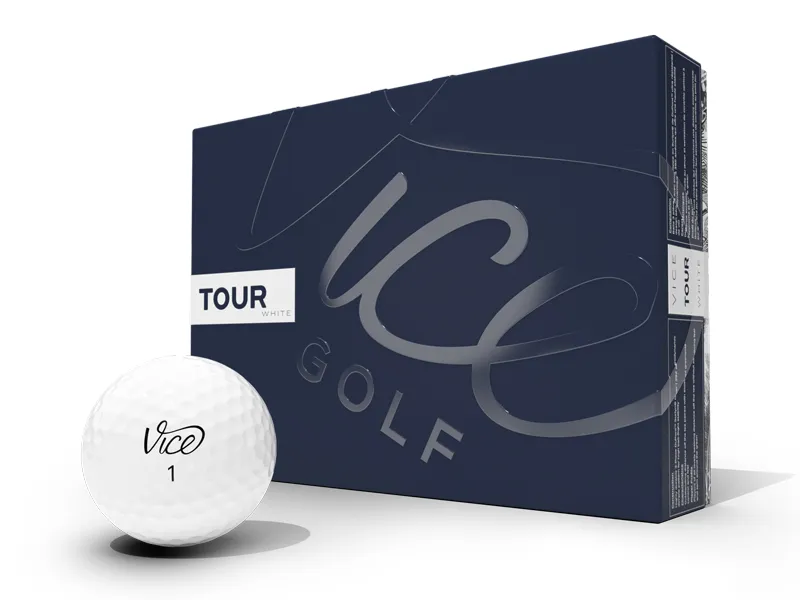
The Vice Tour, like the Vice Pro is a three-piece golf ball but, despite its Tour name, is intended to be the workhorse of the range versus the tour performance of the Pro Plus and the workability of the Pro. This ball uses a Soft Energy Speed Core which gives players a boost in distance, and I found its long game performance to be comparable to the Vice Pro.
The 392-dimple design of the Vice Tour gives it impressive stability in the wind alongside its higher flight, and around the greens, it feels surprisingly soft for a product that’s not intended to be one of the best premium golf balls. It didn't quite give me the same amount of spin as the Pro or Pro Plus on chips and pitches, but there’s still plenty of stopping power here, especially for a mid-price ball.
The Tour doesn’t come with the Tracer alignment aid, but its solid black sidestamp is surprisingly effective if you need a little assistance when lining your ball up to putt. It feels and sounds good off the putter, too, providing a soft, controlled impact and good feedback for dialling in your speed on the greens.
- Read our full Vice Golf Tour Golf Ball Review
How we test golf balls
Whatever the golf product I’m looking at, there’s a thorough testing procedure that I follow that revolves around the Golf Monthly ethos of providing the most insightful and honest reviews possible. My colleagues and I are all regular golfers too, and we want to make sure you’re as well-informed as possible if you want to make a buying decision.
When I test a golf ball, I start indoors at our Performance Lab, powered by Foresight Sports. I put all the golf balls I write about through their paces on my Foresight Sports GC3 launch monitor and the FSX Pro software helps me quantify the golf ball’s performance.

I try to eliminate all possible variables by using the same set of clubs when I test balls, and I also choose a benchmark ball, usually an industry leader, to compare every ball’s performance against.
Then, I take the ball outdoors and subject it to real-world playing conditions like wind, rain, and different types of turf. I try to test balls across multiple rounds, and take my benchmark ball out alongside them so I can be as insightful and honest as possible about how the ball performs in the hands of, in my case, a former touring professional with over a decade in the industry.
It’s worth noting that manufacturers can’t pay for a good review, and I draw my conclusions from the data I collect and my own experiences from the testing I carry out. This allows me to be as honest as possible with you and give you first-hand, unbiased information about the golf balls featured here.
How to choose golf balls
There are so many different types of golf balls out there and, with so much going on under the hood, it’s not easy to pick the right ball to play. Just nailing down the most important set of features or characteristics is hard enough, and even if you think you’ve found the right formula, the golf ball that you use also needs to feel good to you off the clubface. For that reason, we’ve put together a few key points to consider when buying your next box of golf balls.
Soft or firm?
The days of golf balls feeling like a rock off the face are behind us, but there’s still a variety of different feels to choose from - and they can be very personal to you. Are you like me and prefer a slightly more ‘clicky’ golf ball, or do you prefer a softer feel off the face? The range of Vice golf balls we’ve featured above has options in either category, so if feel is king to you then we’d recommend trying a few models from the tee, the fairway, around the green, and even with the putter to see what feels best to you.
Cover material
Urethane-covered balls offer the best control of spin and feel around the green, but they cost a lot more than a Surlyn-covered ball. If you’re an elite player, you’ll definitely want to go for the former, but anyone else should experiment to see if the added cost is worth spending. After all, if your preferred shot around the green is a bump-and-run, or you’re actually stocking up on balls for the winter, you’ll probably want to look at one of the best mid-price balls instead.
Long game or short game?
Following on from the previous point, which aspect of the game is most important to you? If you want to get as much as possible out of your long game, or simply want to hit the ball as far as possible, your choice of ball will be different from a player who loves working the ball and getting creative with their wedges.
For a premium feel and Tour performance, the Vice Pro or Pro Plus will give you the best feedback around the greens and control of spin with short clubs. You might also want to look at our guide to the best soft feel golf balls if you want even more softness than the Vice range offers.
Color
Your balls don’t just have to be a basic white or winter yellow. Vice offers balls in some extremely creative color options, and is known for pushing the bar when it comes to golf ball color palette and personalization options. That being said, think about the light conditions and time of year that you’ll be playing. Some of the more outrageous golf ball designs might look fantastic on the green but be practically invisible in the air or the semi-rough.
Budget
We’d always recommend setting a budget and sticking to it when it comes to golf balls. Golf clubs last for a while, but all it takes is a bad swing for a ball to be gone for good. What’s interesting about Vice, however, is the fact that they give discounts on their website based on how many balls you buy. So, consider buying a stock of balls for the season or pooling some cash with mates to buy several boxes of personalized balls for that golf trip in one go.
FAQs
Are Vice golf balls any good?
Yes, Vice balls are objectively good based on the performance data I’ve gathered in testing them, and they represent good value for money when you buy them in bulk. The best ball for you, however, depends on your game, how you like to play, and what you like to feel. If you’re a creative player who likes to work the ball, the Vice Pro might be very good for you, whereas it might not suit you as well if you've got a high swing speed since your tee shots might rise too much and lose carry.
Are any Vice golf balls good for low handicappers?
Yes, Vice Golf’s Pro series balls are excellent options for low handicappers and even elite players. They deliver the sort of performance that you can expect from premium balls if you have the requisite clubhead speed, and their urethane covers are exactly what’s needed for control around the green.
Do any pros use Vice golf balls?
At the time of writing, we can’t confirm whether any top touring professionals use Vice golf balls. That’s not to say that amateurs or even professionals will lose out if they use a Vice ball, especially a model like the Vice Pro Plus. As our reviews suggest, Vice balls can be an excellent choice for you depending on your style of play.
For more advice on what golf balls you should purchase, take a look at our guides on the best premium golf balls, best golf balls for high handicappers and best value golf balls.
