






Bernhard Langer Augusta National Course Guide: Hole 6
A guide to the sixth hole at Augusta National, including tips from two-time Masters champion and 37-time Masters competitor Bernhard Langer

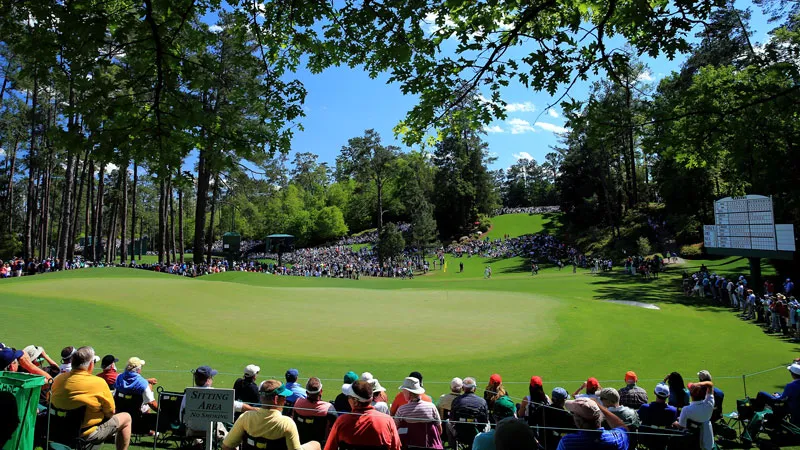
A guide to the sixth hole at Augusta National, including tips from two-time Masters champion and 37-time Masters competitor Bernhard Langer
Bernhard Langer Augusta National Course Guide: Hole 6
Augusta National Hole 6 Par 3 180 yards
1 | 2 | 3 | 4 | 5 | 6 | 7 | 8 | 9 | 10 | 11 | 12 | 13 | 14 | 15 | 16 | 17 | 18
The sixth will be seen as a birdie opportunity when the pin is positioned favourably on the front-left side of the green. A number of tiers populate the putting surface and the slopes can be used to the player’s advantage. That said, three-putts are commonplace when you find yourself on the wrong portion of the putting surface. The most difficult pin position is back right, as anyone coming up short will face a long putt up a tier, while anyone getting a little bit too aggressive will have very little green to work with as they attempt a downhill chip towards the flag.
Langer: “A great par three, but perhaps too severe with the top-right corner pin position. I need to stop a long-iron tee shot on an area that is roughly 10 yards deep and eight yards wide.”
Best ever score: 1 Worst ever score: 7
Memorable moment: In 1942, in the days of the 18-hole Masters play-off, Ben Hogan and Byron Nelson finished 72 holes tied for the lead. Nelson was clearly under the weather as they started extra holes, and fell five strokes behind after the 5th. He hit his approach on the 6th to tap-in birdie distance and proceeded to play the next eight holes in six-under-par, ultimately prevailing by one shot.
Expand How Can I Play Augusta National?

How Can I Play Augusta National?
This is one of the most exclusive golf…
Expand 10 Things You Can’t Do At Augusta National
10 Things You Can’t Do At Augusta National
Augusta National, annual host of the Masters, has…
Expand Golf Courses With Augusta-Inspired Holes
Golf Courses With Augusta-Inspired Holes
These courses built replica holes from Augusta National's…
Expand Inside Augusta National’s Incredible New Masters Shop
Inside Augusta National’s Incredible New Masters Shop
Augusta National unveiled its new Masters shop and…
Worst moment: With Jose Maria Olazabal looking to get up and down on hole 6 in 1991, he twice chipped towards the green only for the slope to send his ball straight back. With his third attempt he sent the ball off the back. He finished with a quadruple-bogey seven to curb his chances of taking his first green jacket ahead of Ian Woosnam.
