





Bernhard Langer Augusta National Course Guide: Hole 18
A guide to the eighteenth hole at Augusta National, including tips from two-time Masters champion and 37-time Masters competitor Bernhard Langer

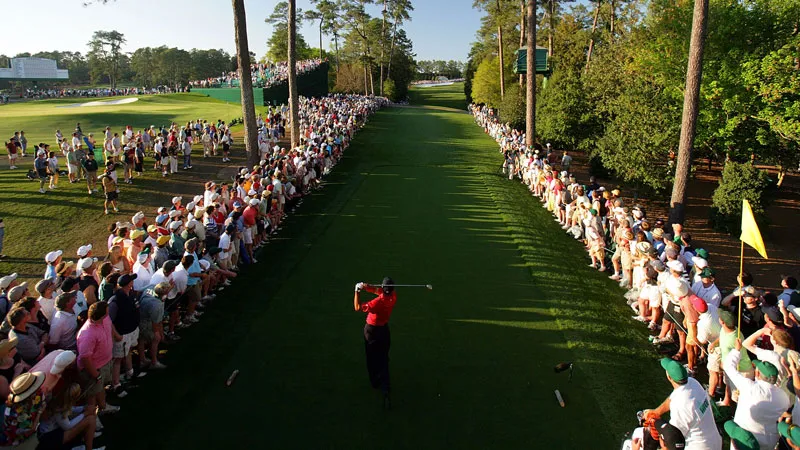
A guide to the eighteenth hole at Augusta National, including tips from two-time Masters champion and 37-time Masters competitor Bernhard Langer
Bernhard Langer Augusta National Course Guide: Hole 18
Augusta National Hole 18 Par 4 465 yards
1 | 2 | 3 | 4 | 5 | 6 | 7 | 8 | 9 | 10 | 11 | 12 | 13 | 14 | 15 | 16 | 17 | 18
If you miss the fairway on the 18th, you’ll be struggling for bogey; if you find the fairway it’s a genuine birdie chance. Drives need to be worked off a bunker that sits on the apex of the slight dogleg right to open up the green. After a good tee shot, 150-180 yards remain to a tiered putting surface that’s some 30 yards from back to front. The pin is most accessible when it’s in a slight depression in the middle of the putting surface, and a shelf beyond the flag can be used to draw the ball back towards the hole.
Related: 10 Things You Can't Do At Augusta National
Langer: “This tee is one of golf’s tightest and longest shoots. The key is to hit a slight fade for the dogleg, then it could be a mid-iron or much longer club to the elevated, two-tier green, depending on the pin and the wind. There is a birdie chance if you find the right plateau.”

Memorable moment: There was no escaping the tension in the final round of the 2004 Masters as Phil Mickelson stood on hole 18's green. If he made his 20-foot putt for birdie, he would win the tournament outright and take his first Green Jacket.
The ball seemed to take an eternity to drop, but when it did the crowd erupted and initiated Mickelson's memorable star jump celebration.
Expand 10 Things You Can’t Do At Augusta National

10 Things You Can’t Do At Augusta National
Augusta National, annual host of the Masters, has…
Expand How Can I Play Augusta National?
How Can I Play Augusta National?
This is one of the most exclusive golf…
Expand Golf Courses With Augusta-Inspired Holes
Golf Courses With Augusta-Inspired Holes
These courses built replica holes from Augusta National's…
Worst moment: Tripping up in your best opportunity to win the Masters probably hurts slightly less when you've won the odd green jacket or two. Yet Arnold Palmer would have felt his final hole collapse in 1961 just as fiercely.
Related: The Trophies Awarded At The Masters
Palmer only needed to make par to win the tournament, but finished with a double-bogey to hand Gary Player his first Masters victory. The King found a bunker with his approach and from there the thread attached to the green jacket with his name on it began to unravel.
