5 Old Drivers That Modern Technology Still Can’t Beat
From this legendary TaylorMade driver to the 'most forgiving' Ping model, we look at the 5 'unicorn' drivers that reached peak performance years ago - and why even Tour Pros refuse to give them up


In the golf equipment world, we are told every January that the "latest and greatest" has arrived. We’re promised 10 more yards, tighter dispersions, and A.I.-designed faces that make even our worst swings look like Rory McIlroy’s.
But if you spend enough time on the range or scouring the used bins at the local pro shop, you’ll notice something interesting. There are certain drivers that players simply refuse to give up. These "unicorns" reached a peak of performance where the gains from modern technology have hit a wall of diminishing returns.
Here are the five drivers that, in my opinion, have never truly been topped.
1. 2017 TaylorMade M2
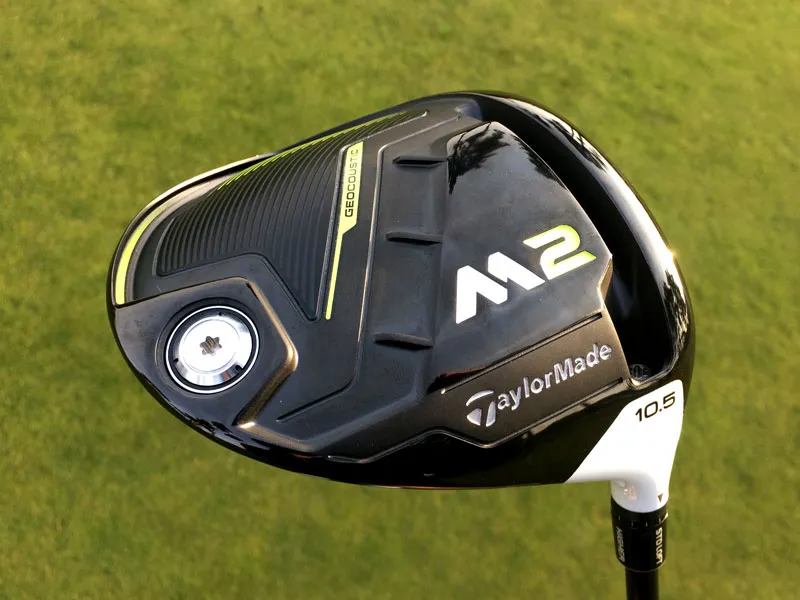
The 2016 M2 was a revolution, but the 2017 version (the one with the lime green accents) perfected the formula for me.
It featured a multi-material construction that shifted weight lower and further back than ever before, and the sound and feel of impact were exquisite. Even today, you’ll find mini-tour players and scratch golfers clinging to this head - I myself was using this driver up until 2023 and still have it on standby in my garage.
It has a legendary "thud" at impact and a level of ball speed and consistency that still rivals the newest models.

Rory McIlroy was recently asked what his favorite driver of all time was, and without hesitation, he said the TaylorMade M2. Now granted, he didn’t specify which M2, but for my own personal satisfaction, I am choosing to believe it was my favorite 2017 version.
2. Ping G400

Before "10K MOI" was a marketing buzz term, there was the Ping G400.
This driver is arguably the most forgiving club ever built. While the G425, G430, and now the G440 are fantastic, many purists argue the original G400 had a better sound and a slightly smaller, more manageable 445cc head shape.
It sits perfectly square behind the ball and basically refuses to twist on off-center hits. If you want to find the fairway 80% of the time, this is still the gold standard in my opinion.

Despite recently switching to a Titleist GT3, Patrick Reed still travels to tournaments with his G400 as he told me in a recent WITB interview, and Bernhard Langer is one of a number of tour pros still gaming the G400 despite it being released nearly a decade ago.
3. Callaway Rogue ST Max

Callaway has done an incredible job this year with its Quantum range, but to me, the Rogue ST Max still represents the pinnacle of stability in its driver lineage.
The Rogue ST Max used a Tungsten Speed Cartridge to create a driver that was incredibly fast, and the muted impact sound is still one of my favorites of all time.

It has a refined, matte-black look and a consistent start line that many golfers find more reliable than the newer, flashier counterparts.
Once again, we still see tour representation of the Rogue ST family, and recent Arnold Palmer Invitational winner Akshay Bhatia had one in his bag en route to his impressive playoff victory over Daniel Berger.
4. Cobra F9 Speedback

This one is a cult classic among Cobra fans…
The F9 Speedback, to me, was the moment Cobra stopped being an "alternative" brand and started leading the pack. It was the first Cobra driver to truly master aerodynamics without sacrificing a low Center of Gravity (CG).
With its CNC-milled face - a feature Cobra still champions - the F9 provided a level of face-consistency that was years ahead of its time. It’s loud, it’s aggressive, and in terms of raw distance, it can still go toe-to-toe with anything released in 2026.
5. TaylorMade SIM

When TaylorMade moved away from the "M" series, its next move gave us SIM (Shape In Motion).
The asymmetric inertia generator on the sole was a gamble that paid off. The original SIM (the blue and white model) remains a favorite for high-speed players because of its low-spin characteristics and raw "workability."
While modern drivers focus heavily on forgiveness, the original SIM offered a "piercing" flight that better players still crave, and many of its key design features are still seen today in TaylorMade designs.

Jon Rahm was a SIM player back in the day, and fellow major winner Collin Morikawa is a player who probably frustrated the TaylorMade tour team by sticking with SIM (in both driver and fairway woods) for many seasons.
Why Haven't They Been Beaten?
The USGA and R&A have strict limits on COR (Coefficient of Restitution) - essentially how much "spring" a clubface can have, and frankly, manufacturers reached that limit years ago so more speed is simply off the table realistically.
Today’s improvements are mostly about making the misses better, but for the golfer who finds the center of the face, a well-maintained F9 or M2 is every bit as fast and long as a $600+ flagship model from this year.
If you have one of these five in your bag, you may want to keep it. In my opinion, you may not be missing out on anything but a lighter wallet.
