US Open preview
The second Major championship of 2012 will be decided this week at The Olympic Club in San Francisco. Northern Ireland’s Rory McIlroy travels to California as defending US Open champion.

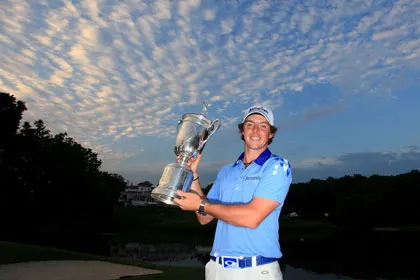
Lowdown: The second Major championship of 2012 will be decided this week at The Olympic Club in San Francisco. Northern Ireland's Rory McIlroy travels to California as defending US Open champion.
With Tiger and Rory seemingly back on form, Westwood coming off the back of a victory, so too Dustin Johnson and with Luke Donald showing no signs of losing his incredible consistency, this should be one of the most exciting US Opens in recent memory.
The bookies have Tiger as favourite, but Westy, Luke and Rory are not far behind - all three hovering around the 12/1 mark.
There will be some interesting groupings to follow this week, perhaps none more so than Tiger Woods, Phil Mickelson and Bubba Watson. That all-American three-ball is sure to draw massive galleries. Defending champ Rory McIlroy will tee it up with Lee Westwood and Luke Donald. Last week's St. Jude Classic winner Dustin Johnson is paired with young stars Rickie Fowler and Ryo Ishikawa.
This will be the 112th running of the US Open, a tournament first held in 1895 and won by Horace Rawlins of England. Through the mid and latter part of the 20th Century the event was dominated by home players but over the last 20 years, an eclectic selection of nations have enjoyed success in this historic tournament. Since, and including when, Ernie Els took the title in 1994, nine US Opens have been won by Americans and nine by international players.
The last two have been won by Northern Irishmen - Graeme McDowell at Pebble Beach in 2010, then Rory McIlroy at Congressional last year. In that event McIlroy took the field apart to win by eight shots from Jason Day of Australia.
The Lake Course at Olympic Club is a unique and historic track. There are no water hazards to contend with, neither is there any out of bounds. There's only one fairway bunker to negotiate (on the sixth) but there are 30,000 trees to avoid. It's a challenging course that Johnny Miller (a junior member at Olympic) describes as "no nonsense."
Subscribe to the Golf Monthly newsletter to stay up to date with all the latest tour news, equipment news, reviews, head-to-heads and buyer’s guides from our team of experienced experts.
It's not an overly long course but, with small greens and testing tee shots, it's not a layout that will be taken apart. It's unlikely we'll see a winning total of 16-under-par like Rory McIlroy produced last year. The first six holes at Olympic are extremely tough. According to USGA Executive Director Mike Davis, it's the "hardest start in golf."
This will be the fifth time the US Open has visited Olympic Club. The track has developed a reputation as a layout that produces unlikely winners. Back in 1955 Jack Fleck defeated Ben Hogan to the title in an 18-hole playoff. Billy Casper did the same to Arnold Palmer in 1966. In 1987, Scott Simpson finished one shot clear of Tom Watson and, in 1998, Lee Janzen outlasted Payne Stewart.
Venue: The Olympic Club, San Francisco, California Date: Jun 14-17 Course stats: par 71, 6,822 yards Purse: $8,000,000 Winner: $1,440,000 Defending Champion: Rory McIlroy (-16)
TV Coverage: Thursday 14 - Live on Sky Sports 1 from 5pm Friday 15 - Live on Sky Sports 1 from 5pm Saturday 16 - Live on Sky Sports 1 from 8pm Sunday 17 - Live on Sky Sports 1 from 8pm
Player Watch: Luke Donald - The Englishman's game should be ideally suited to this course - tight and tricky, not overly long and demanding accuracy and good recovery skills. Perhaps this could be the event Donald breaks his Major duck...
Jason Dufner - The American has been flying under the bookies radar somewhat, but he's the PGA Tour's form player with two victories and a second place in his last four starts. Over the last year he's transformed himself from a journeyman pro into a world beater.
Dustin Johnson - Back on form after an injury-enforced layoff, Johnson won last week in Memphis. A huge hitter, he also has a great short game - an enviable combination.
Key hole: 17th. The second of back-to-back par 5s, Olympic's penultimate hole is a real birdie or eagle chance. It's just 522 yards so it's reachable for the whole field. In previous events it was played as a par-4. The difficulty lies around the green. To the back and right, there's a testing, sloped run-off. Head down there and you'll be facing an extremely challenging pitch.
Where next? US Open - Golf Monthly Microsite

Fergus is Golf Monthly's resident expert on the history of the game and has written extensively on that subject. He has also worked with Golf Monthly to produce a podcast series. Called 18 Majors: The Golf History Show it offers new and in-depth perspectives on some of the most important moments in golf's long history. You can find all the details about it here.
Fergus is also a level-three qualified Rules official and referee.
He is a golf obsessive and 1-handicapper. Growing up in the North East of Scotland, golf runs through his veins.
Fergus once shanked a ball from just over Granny Clark's Wynd on the 18th of the Old Course that struck the St Andrews Golf Club and rebounded into the Valley of Sin, from where he saved par. Who says there's no golfing god?