






Kirkland Signature 2025 Golf Ball vs Amazon Basics Core Soft Golf Ball: Our Head-to-Head Verdict
Amazon's new price-busting golf ball goes up against an established budget offering from Costco. Which ball will come out on top?


As with previous generations of this golf ball, the value proposition is not really up for debate. But it also performs well, with a nice responsive feel, decent levels of spin, and relatively consistent launch monitor data make this an ideal ball for many club golfers.
Pros
- Unbeatable value
- Improved, softer feel
- Good long-game ball speed
Cons
- Noticeable distance loss compared to premium balls
- Disappointing greenside spin and control

The Amazon Basics Core Soft ball is an extreme budget, soft-feel ball. It’s a viable option for those just getting into the game who want a soft-feeling ball, but more experienced golfers will look for more performance at the top end of the bag.
Pros
- Soft feel, particularly around the greens
- Minimal packaging could be seen as eco-friendly
- Very low price point
Cons
- Feels and looks cheap
- Inconsistent performance
As a general rule, the better the golfer the better the golf ball they will need. Tour pros use the best premium golf balls because those golf balls have been engineered specifically for the elite ball strikers and low handicap golfers. They are expensive, but the better players tend to not lose too many balls so a box of Titleist ProV1s will last longer than they would in the bag of a higher handicap player.
Premium balls are not a practical choice for new golfers or higher handicap players, because they don’t have the game to benefit from them and in most cases won’t have the budget to buy a dozen premium balls to replace the ones they lose during an average round of golf.
Golf manufacturers are fully aware of this and most of them produce golf balls aimed specifically at that end of the market. These balls are designed to offer assistance to the golfer that needs help with distance and accuracy, and they are usually much more budget friendly too. Generally you can expect to pay half the price that you would pay for a box of premium balls, sometimes even less.
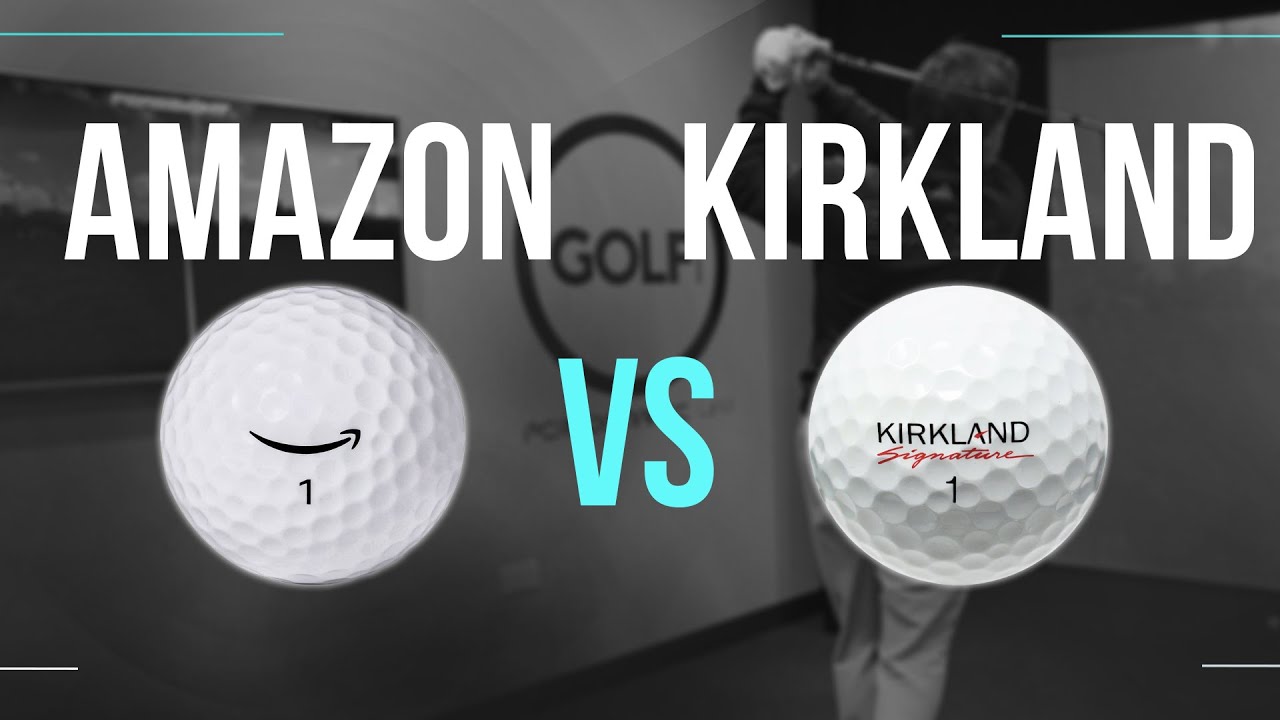
One of the best budget golf balls on the market in recent years has been the Kirkland Signature Golf Ball from Costco, but this year Amazon also threw their hat into the ring by launching the Basics Core Soft Golf Ball. Both are very much in the best value golf balls category and can be considered among the best golf balls for beginners.
We have tested and reviewed both of these golf balls, so let’s see which ball comes out on top, and which is the best fit for your game. You can read below or take a look at the in-depth video above by Golf Monthly gear tester's Sam De'Ath and Joe Ferguson on the new GM reviews channel.
Technology
The Amazon Basics Core Soft Golf Ball represents Amazon’s first step into the golf ball market, with a clear focus on affordability and accessibility rather than tour-level performance. It is geared towards everyday golfers, particularly beginners and higher-handicap players and the technology and price point reflects that.
It is a two-piece construction ball with around a 55 compression, which is at the softer end of the golf ball market. It essentially means that the ball compresses more easily at impact, the purpose of which is to help those with slower to moderate swing speeds launch the ball more easily, while also delivering a noticeably soft feel off the face.
It features a durable ionomer cover, which is a staple on many of the balls in this category (although not with the Kirkland Signature which boasts a urethane cover usually only found on more premium balls). Ionomer does not offer the same levels of greenside spin or short-game control, but it is far more resistant to scuffs and wear. In theory this means you will get a longer life from it, but if your ball is lost in the water or the woods then does it really matter if it's more durable?
Both of these golf balls have a traditional dimple pattern of around 338 dimples, designed to promote stable aerodynamics, consistent flight and reliable distance through the air.

The Kirkland Signature uses a three-piece construction, while as mentioned above it has a urethane cover designed to deliver plenty of spin while still being durable. An elastic core aimed at maximizing distance is another feather in the cap and overall the Kirkland Signature is a clear winner in the tech category as the three-piece construction and urethane cover is not something you can generally expect in a budget golf ball.
Looks
Neither of these golf balls will be winning any awards for their looks. Both are pretty basic, white golf balls with relatively understated branding. In terms of the alignment aids, the Kirkland ball is more subtle whereas the line on the Amazon ball is chunkier. Which is best? That depends on personal preference, but neither of these are anything to write home about when it comes to aesthetics.

Feel
The low price might lead you to expect a fairly basic feel, but the latest Kirkland Signature ball genuinely caught us out. It offers a noticeably softer sensation than earlier versions we’ve tested, marking a clear step forward. While it still can’t quite replicate the refined feedback of a premium ball when struck perfectly, it feels far more responsive than your standard value golf ball, particularly off the putter and when playing shots with the scoring clubs.
As for the Amazon ball, well the ‘Core Soft’ name definitely rings true, especially with the scoring clubs. After just a few chips before my round, I knew I would struggle with distance control with this ball because it felt as though it really jumped off the face. I usually steer towards a firmer feeling ball as I like that ‘clicky’ feel, particularly with my wedges and putter.
The Kirkland ball definitely feels more like a higher end golf ball and is a clear winner in this category. However, some golfers prefer a softer feel so this is a subjective call.
Performance
First the Kirkland Signature ball. Using a Foresight Sports GC3 launch monitor to gather some data, it produced some interesting numbers. Despite being a budget ball, it delivered similar spin and speed data to what I would expect from a premium golf ball, with only a minimal difference in carry and overall distance. Outside on the course the results were not quite as impressive as the premium ball came into its own and the Kirkland was left behind - quite literally in terms of distance.
The Kirkland ball shares some similarities with balls in much higher price brackets but it has a less penetrating flight and does not grab the greens as well. However, when compared to balls in its own price bracket the Kirkland can hold its own against any, and it's applicable for a range of club golfers and not just beginners or higher handicappers.

The performance of the Amazon golf ball was distinctly underwhelming, even for a ball in the 'value' category. While the KIrkland ball delivers enough all around performance that it could be played by mid-handicap golfers and even those of a slightly more accomplished skillset, the Amazon ball is very much one for the new golfer or high handicap player.
Why? Well off the tee, anyone with a relatively high swing speed will see the ball balloon up in the air and lose distance to the amount of spin generated. On approach shots the opposite is true, spin numbers are very low meaning it is difficult to get any grab. Around the greens it's a similar story, although that is very much to be expected as low compression, ionomer covered balls do not deliver much greenside spin. The chip and run shot is the only option available really, although this is fine for the lesser skilled player who generally opts for that kind of shot anyway.
So when it comes to performance the Kirkland is a clear winner as it performs well above its price point, whereas the Amazon is very much what the price says it is. That's fine though as for those new to the game price is often the decisive factor.

What should you choose?
Choose the Kirkland Signature if…
- You don't mind paying a bit extra
- You need versatility off the tee and around the green
- You need long-game ball speed
Choose the Amazon Basics Core Soft if…
- You're shopping on a budget
- You have a slow swing speed
- You don't require greenside spin and control
