






Check Your Swing For The No.1 Cause Of Lower Back Pain In Golf (And Learn How To Fix It)
If you've ever suffered with back pain after (or during) a round of golf, you should check your swing for this destructive movement and fix it with my top tips
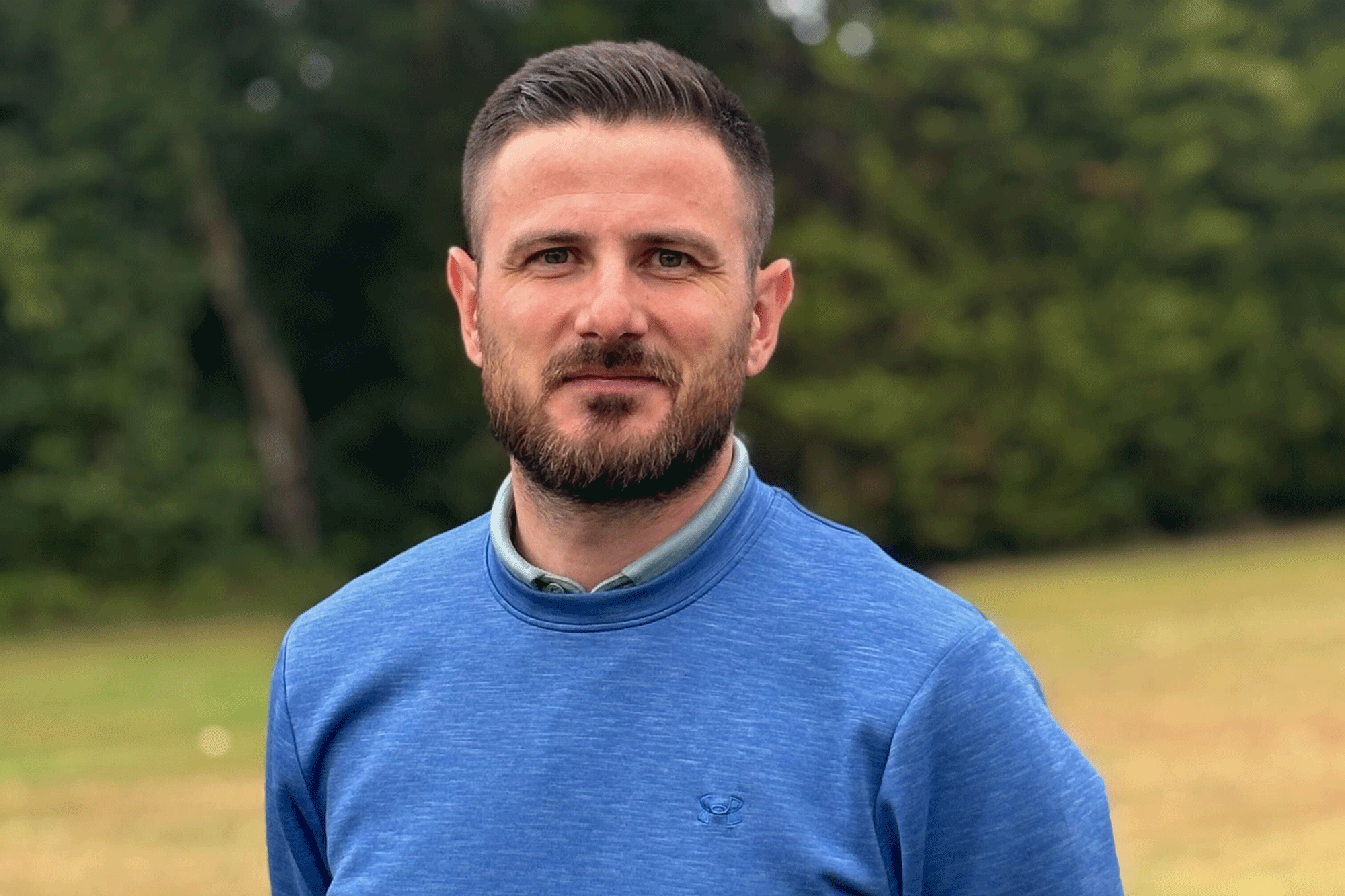

Reverse spine angle is the No.1 cause of lower back pain in golf - according to PGA Fellow Professional, Ben Emerson.
As his game changer clinic column outlines below, even low-handicap golfers can struggle with this harmful movement - irrespective of your golf fitness, flexibility or mobility.
The impact isn't limited to your long-term participation in the game, however, as reverse spine angle can also be catastrophic for your ball striking consistency.
In this article, the Top 50 Coach and Author of one of our top-12 best golf books, Strike It Pure, shares how you can identify reverse spine angle in your own swing and take steps to improve your ball striking and protect your back in 2026...
Check Your Golf Swing For The No.1 Cause Of Lower Back Pain
The Problem
A reverse spine angle is the number-one cause of lower back pain in golf, and while I could see this was causing single-figure golfer Benjamin some issues now, this was nothing compared to the pain he might be letting himself in for down the line if we didn't fix it.

This reverse spine angle position leads to inconsistency and lower back issues
Benjamin is a fit and healthy individual who plays off single figures, so he can (and is) getting away with that reverse spine angle to an extent.
However, when he naturally loses flexibility and mobility, this will cause significant issues with his performance on the course and the health of his lower back.
It's fairly simple to identify in the golf swing, too. In your next driving range session, record your swing face-on and stop the video at the top of the backswing.
If you drew a line from your belt buckle through the top of your head, the line should point away from the target. If it points towards the target, you've likely fallen into the reverse spine angle trap.
Amateur golfers who exhibit a reverse spine angle in the golf swing often have to make serious compensations to actually make contact with the ball at impact, so consistency of strike can be a real issue for them.
The Solution

Ben was on hand to help Benjamin get into a better position at the top of the backswing
To fix this, I placed a large blue foam roller just outside Ben's trail foot and asked him to rotate himself over the top of it imagining he was holding a heavy ball.
Once he had correctly managed the movement, I added a medicine ball to his hands to help pull him over and away from the target – in complete contrast to the direction he was moving previously.

This foam roller drill is great and something any amateur golfer can try at home
If he performed his reverse spine angle backswing and dropped the ball, it would hit him on the trail foot. However, with the new movement, the dropped ball would hit the floor beyond his trail side.

These drills and props helped get Benjamin in a much better backswing position
We also used a band under his lead foot to train the feeling that he was pulling out and then up towards the trail side in the backswing.
It would feel weird to pull the band straight up above his head when starting the backswing, but that is what he would have been doing with the reverse spine angle movement that he came to me with.