






Lee Westwood stance and ball position tips
Lee Westwood stance and ball position tips will help your ball striking

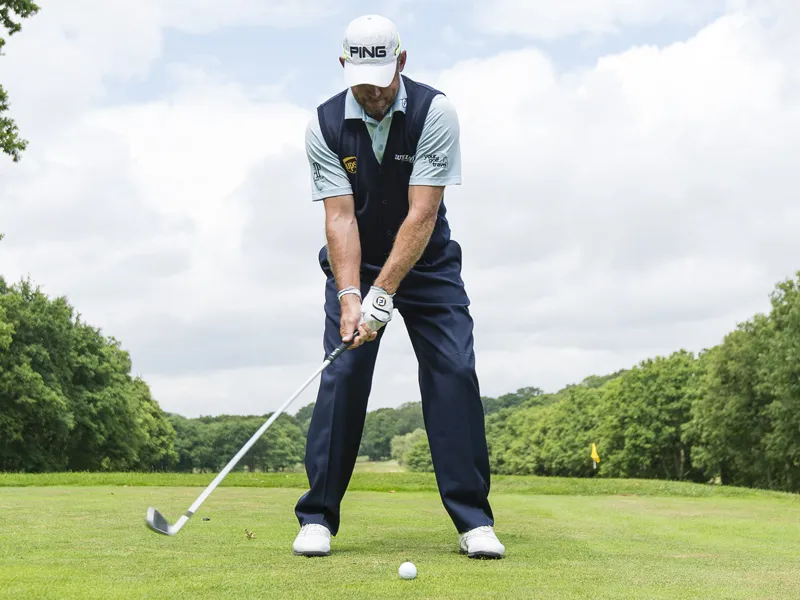
In this Lee Westwood stance and ball position tips video, the Englishman explains how to groove two of the most important basics in golf
Lee Westwood stance & ball position
With a mid iron, your stance should be a little less than shoulder width apart. Obviously, your stance gets slightly wider as the club gets longer to provide some extra stability as you create more speed. This provides stability without restricting your mobility. As I take my address, I like to have my knees pushed out slightly, again this just aids that stability and athleticism you’re looking for. It should look like a strong position from which you can make a dynamic swing.
Watch Lee's Tips on How To Grip The Golf Club
Watch Lee's Weight Transfer Video
Weight position
Subscribe to the Golf Monthly newsletter to stay up to date with all the latest tour news, equipment news, reviews, head-to-heads and buyer’s guides from our team of experienced experts.
A great way to set your posture and your weight distribution in the correct position at address is to take your normal stance but stand upright and hold the shaft of your club across your hips. Bend at the hips so your upper body moves over the ball. Finally, allow your knees to flex. This sets your weight over the laces of your shoes. From there, let your arms hang naturally down directly underneath your shoulders – this represents how far from the end of the club, your body should be.
Swing arc
Getting the perfect ball position with every club is important because it needs to be at the correct point in the arc of your swing to ensure a good contact and the correct trajectory. Obviously, if your body moves ahead of the ball or away from the target during the golf swing, that swing arc will change but the idea is certainly not to do that. Instead, you are looking for a consistent swing arc by keeping your upper body set nicely over the ball throughout the rotation. The correct ball position depends on which club you have in your hands. Keeping these consistent as you practice and play is very important. Obviously, if you want to hit the ball lower, it goes back in your stance and if you want to flight it higher, move it forward but for all normal shots you hit, it pays to stick to the following ideas:
Driver - With the ball teed up you are looking to sweep the ball away slightly on the upswing. This requires the ball to be forwards in your stance – just inside your left heel.
Mid irons - With your mid irons the ball should come back in the stance. This will enable you to make contact fractionally before the bottom of the swing arc.
Short irons - The ball move back into the middle of the stance. Again, this will help you take the ball then the turf with your wedges.

In July 2023, Neil became just the 9th editor in Golf Monthly's 112-year history. Originally working with the best coaches in the UK to produce instruction content, he went on to become a feature writer interviewing many of the biggest names in the game including Tiger Woods, Seve Ballesteros, Rory McIlroy and Arnold Palmer.
A 5-handicap golfer, Neil is a club member who takes a keen interest in the health of the game at grassroots level. You’ll often now find him writing about club-related issues such as WHS, membership retention and how best to bridge the gap between the range and the course.