Alexander Levy Swing Analysis

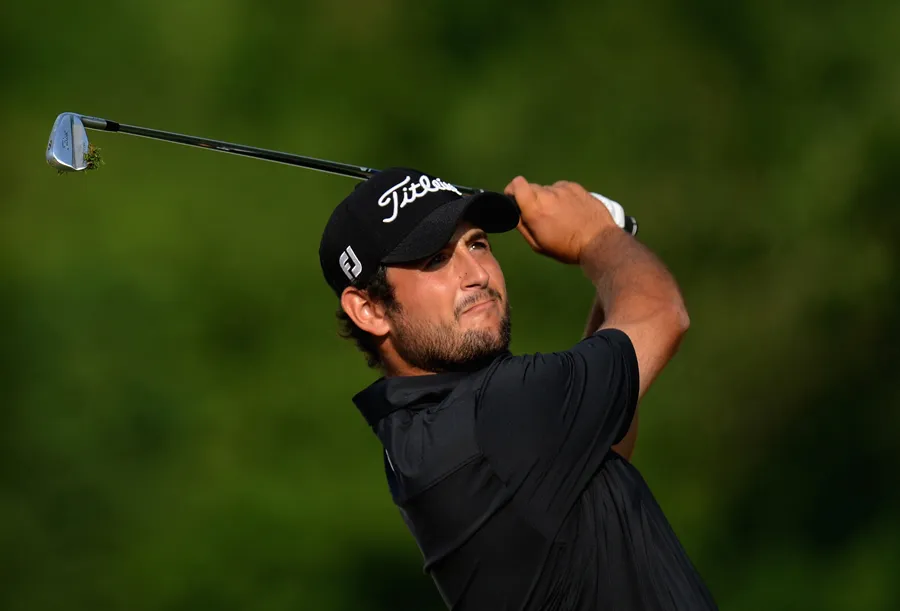
In this Alexander Levy swing analysis, GM top coach Barney Puttick looks at what we can all learn from the technique of the exciting Frenchman
Alex Levy has made quick progress from elite amateur to the top echelons of the European Tour and looks set to continue his upward trajectory. This brisk no nonsense swing is really efficient and from my Alexander Levy swing analysis you can see there is plenty here to admire and copy if you can.
He has strong angles at address – in particular his posture that is strong but also athletic, ready for a powerful upper body rotation. As he begins that turn he sets the club right on plane – this is another bi-product of having a technically sound address position. It is worth noting how far he moves into his right side during the backswing and noticeable how his head moves in sympathy with this action. If you are hanging on to the thought of ‘don’t move your head’ this swing sequence shows that a lateral head movement that facilitates a full turn is no bad thing and it also happens to be far kinder for our backs!
At the top of the backswing, the club stops just short of the parallel. For me, the length you swing the club is really just a style point. As we are all so different in terms of our physiology and flexibility, there is no one-size fits all approach and there are many examples of successful players with long and short swings.
The transition from backswing to downswing is beautifully smooth and it is worth observing here how stable the body looks as he makes the move back to the ball. Into the impact area, Alex really releases the club fully past the ball, and I really like the way he drives his body through the shot. There is no question of steering this drive. It’s a fully committed swing but one that oozes efficiency.
Subscribe to the Golf Monthly newsletter to stay up to date with all the latest tour news, equipment news, reviews, head-to-heads and buyer’s guides from our team of experienced experts.

In July 2023, Neil became just the 9th editor in Golf Monthly's 112-year history. Originally working with the best coaches in the UK to produce instruction content, he went on to become a feature writer interviewing many of the biggest names in the game including Tiger Woods, Seve Ballesteros, Rory McIlroy and Arnold Palmer.
A 5-handicap golfer, Neil is a club member who takes a keen interest in the health of the game at grassroots level. You’ll often now find him writing about club-related issues such as WHS, membership retention and how best to bridge the gap between the range and the course.