Copy My Expert Posture Example To Reset Your Golf Swing And Improve Ball Striking
Posture is a key part of the golf swing but one that amateurs often get wrong, so we asked PGA pro Keith Wood for his advice on finding the right positions
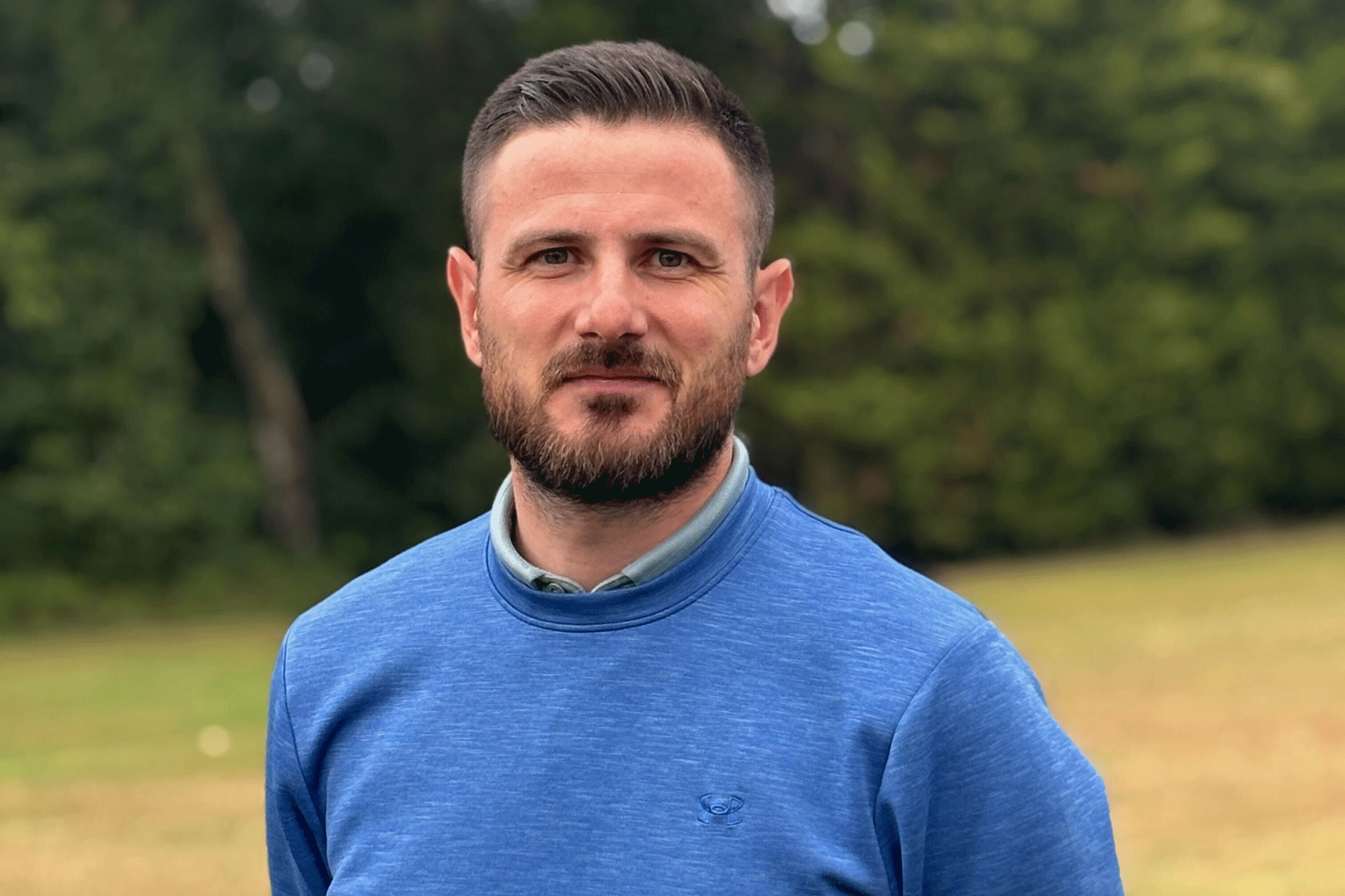

There could be a multitude of reasons why your ball striking is not as consistent as you would like, but having a poor posture is almost certainly towards the top of the list for many amateurs.
Often, the issues that result in poor contact start before hitting the golf ball - but by making a few simple alterations you can play better golf in 2026.
With the help of PGA professional and Top 50 Coach Keith Wood, who has taught golfers for more than 30 years, you can identify your posture problems and address them (pardon the pun) with actionable tips that will help you cut your handicap...
How To Perfect Your Posture In The Golf Swing
Think of posture as the axle to a wheel – or the centre to your swing. Get it wrong and the swing becomes inefficient and challenging.
This image (below) shows a good posture - the optimum back angle supported by enough knee flex to counter the tilt. This is good for balance and stability, and allows you to make the best use of the ground through your legs.

This is an example of good posture - a nice athletic position from which to generate power and strike the ball consistently well
A good tilt also produces good arm hang, directly under the shoulders. Get this right and it will have a positive effect on the mechanics of your backswing.
My arms are hanging roughly vertically and the club comes out at an angle through the hands. This automatically sets my wrists in a position where they can create some angle in the backswing by hinging.
See how complicated poor posture looks in the image below.
The spine angle is too upright, my arms are hanging too close to my legs with minimal wrist angle and my weight has shifted into my heels, creating a sitting position – hardly a dynamic base from which to prepare for an athletic move like the golf swing.

In contrast - this is an example of poor posture. Everything is very cramped and the weight being in the heels prevents any sort of athletic movement from occurring
Problems at impact often stem from a bad start at set-up. In the image (below), you can see a poor impact position with the pelvis tucking under and moving towards the ball.
There is no body rotation through the ball and the hands are too high at impact, which makes it extremely difficult to square the clubface.
Balance would also be challenged in this kind of move as the whole body shifts towards the ball and onto the toes of the feet. Achieving a centred strike is almost impossible and the dreaded shank becomes highly possible.

If this looks like you at impact - be sure to follow Keith's tips on a better golf swing posture (above)
The final image from an aerial view is a simple visual of where your weight should be when addressing the golf ball.
If you have the correct tilt from your spine angle, and the optimum knee flex to balance that tiIt, as in the first image at the top of the article, then your balancing point will be where I have laid my golf club on the ground.

An aerial view provides a great example of where the correct balance points should be in the perfect golf swing posture
This balancing point should be under the balls of your feet (not in the heels or toes) and in an athletic position from which you can perform efficiently.