






Toptracer at The Open – how does it work?

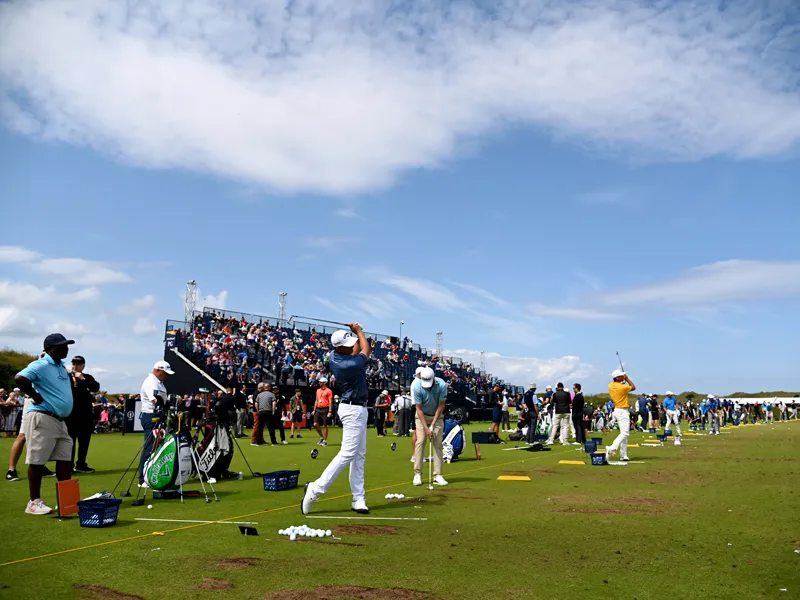
Shot tracking technology has become a fixture at major golf events over recent years. Here, we look at Toptracer at The Open – how does it work?
There is no doubt the introduction of ball tracking software has transformed the viewing experience of the world’s biggest golf events. Being able to see the exact flight of a key shot in real time is something golf fans, both on the ground and watching on television, will become accustomed to this week at the 148th Open at Royal Portrush. The question is, with Toptracer at the Open – how does it work?
There are two separate essential elements to the shot-tracking offering – on the range and on the course.
During the week of the Open, Toptracer will track 20,000 shots on the range. Ten cameras positioned above the grandstand behind the practice tee will pick up the ball flight of each shot hit. The Toptracer software then extrapolates key ball data such as ball speed and carry. This is then relayed to the crowd via a big screen situated to the left of the hitting area. As the data comes from cameras that are capturing the ball flight, the information reflects how the ball is reacting to the exact weather conditions. At The Open, as different wind conditions play their part, the players can often be seen staring at the screens, gaining a more detailed understanding for how far the ball is carrying. In truth, the ball flight tracking and data isn’t primarily for the players but to help enrich the experience of the fans both watching on the ground and those receiving the range footage on the television.
Sky’s Open Zone (the place where players are interviewed and asked to demonstrate certain shots) will also feature Toptracer shot tracking. This year, the Sky team will be challenging players to hit a carry yardage of 148 (the total number of Open Championships).
On the golf course at Royal Portrush, there are 11 fixed camera positions tracking shots hit from various different tees. Four of these have also been set up to provide the same ball tracking data that is available on the range. Both the ball flight graphics and data will be used by Sky in their broadcast.
Subscribe to the Golf Monthly newsletter to stay up to date with all the latest tour news, equipment news, reviews, head-to-heads and buyer’s guides from our team of experienced experts.
In addition, there will be two roving Toptracer cameras providing ball flight graphics for shots hit from the fairway.
Shot tracking technology has been a part of the experience at The Open since St Andrews in 2015. As it grows each year, it is hard to remember a time when this sort of technology wasn’t used. As these innovations continue to grow and evolve, golf fans are getting a fascinating new perspective on the game and the superstars they follow.

In July 2023, Neil became just the 9th editor in Golf Monthly's 112-year history. Originally working with the best coaches in the UK to produce instruction content, he went on to become a feature writer interviewing many of the biggest names in the game including Tiger Woods, Seve Ballesteros, Rory McIlroy and Arnold Palmer.
A 5-handicap golfer, Neil is a club member who takes a keen interest in the health of the game at grassroots level. You’ll often now find him writing about club-related issues such as WHS, membership retention and how best to bridge the gap between the range and the course.