






Where should my divots start?

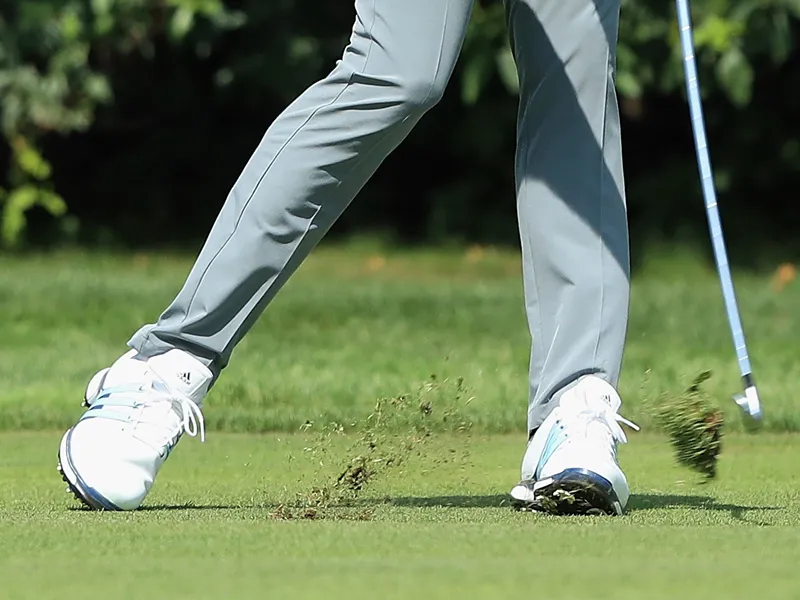
If you are struggling with fat or thin contacts it is worth asking the question: where should my divots start? Golf Monthly Top 25 Coach Clive Tucker offers some simple advice
Great ball-strikers all deliver the club on the ideal angle of attack. Steep enough to catch the ball first without being too steep and killing the flight. It's a tricky balance. If you are looking to improve your ball-striking it is worth asking - where should my divots start? By concentrating on this element with your mid-irons you should be able to make major strides with the quality of your contacts.

A great drill is to place a tee in the ground where the ball would usually be in your stance - with a mid iron, you can place two balls inside your left heel to help you mark the spot. Now make a swing taking a normal divot. The tee peg acts as a marker in the ground and the divot should start 1/2 an inch past it.
Where should my divots start?
This is the perfect, ball-first, ground-second contact. If you are striking too close to the tee there are two factors to check - ball position and weight transfer. Try moving the ball back in your stance a fraction and ensure you are moving your weight towards the target through impact.
Is your angle of attack right?
If you are catching shots thin with the divot starting more than an inch past the ball, move the ball up in your stance a fraction. Also check that your hands are not too far ahead of the ball at address - leaning your hands too far forward can cause thin strikes and low flighted shots.
Even if your divots are spot on, head to the practice ground and use the tee peg drill. This is a great way to focus your mind on creating the ideal angle of attack. The more consistent your divots are, the more consistent your overall ball-striking will be. So if you are asking yourself; where should my divots start? - use this process to become more precise. Better strikes are guaranteed!
