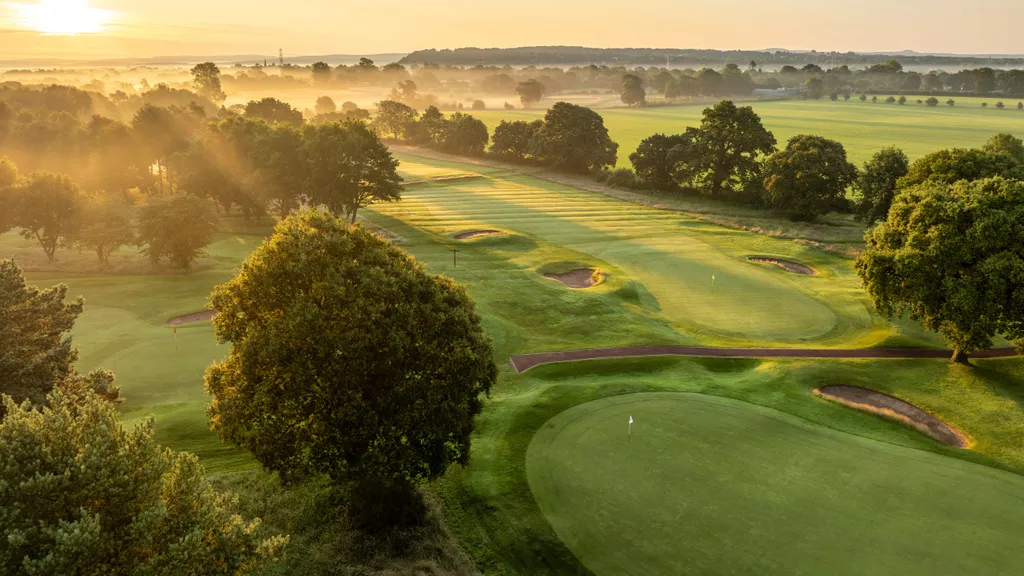






TPC River Highlands Facts: 7 Things To Know About The Travelers Championship Venue
TPC River Highlands is the permanent home of the PGA Tour’s Travelers Championship. Here are 7 things to know about the Connecticut venue


TPC River Highlands has undergone several transformations during its history, but since 1984, it has been best known as the home of the PGA Tour’s Travelers Championship.
Nowadays, the tournament is one of the biggest on the PGA Tour thanks to its status as a Signature Event, but TPC River Highlands has long been one of the stars of the show.
At just 6,841 yards, it is one of the shorter courses used on the PGA Tour, helping to make low scores commonplace.
However, that doesn’t mean it can’t trip players up, in particular on a famous stretch of holes on the back nine where birdies and eagles can come along as easily as bogeys.
In fact, it’s the tendency for the course to produce low-scoring rounds that have given it some of its most memorable moments, with one in particular written into golf folklore.
But what exactly is there to know about the famous Connecticut layout? Here are seven things about TPC River Highlands you may not have been aware of.
A Rich History
The Connecticut course was built in 1928 and originally known as Middletown Golf Club. Six years later, it was renamed Edgewood Country Club.
It was purchased by the PGA Tour in the early 1980s and brought up to TPC standards with a redesign by Pete Dye.
When it reopened, it was initially called TPC of Connecticut before it was redesigned by Bobby Weed in 1989 and renamed TPC River Highlands – a nod to its elevated position above the nearby Connecticut River.
It has been the permanent home of the Travelers Championship since 1984, when the tournament was named the Sammy Davis Jr. Greater Hartford Open.
The 'Bermuda Triangle'

The 17th signals the end of the "Bermuda Triangle"
Following Weed’s redesign, a three-hole stretch framing a lake on the back nine became famous for its risk/reward opportunities.
It later became known as the Bermuda Triangle and encompasses holes 15, 16 and 17.
The drivable par-4 15th can be tempting for players to go for the green from the tee, but water lurking to the left punishes any inaccuracy.
The 16th is a par-3 that requires a precise tee shot to a shallow green with water in front.
Finally, at the the par-4 17th, the lake runs along the entire length of the right side before the hole bends right towards a green on the far side of the water.
A 58 From Furyk

Jim Furyk shot a 58 at TPC River Highlands in 2016
In 2016, TPC River Highlands was the scene of a landmark moment in PGA Tour history when Jim Furyk shot a 58 in the final round of the Travelers Championship.
It remains the lowest score in PGA Tour history, and a plaque commemorating the achievement is beside the 18th green.
That’s not the only thing marking the round. A new clubhouse opened at TPC River Highlands in 2019 and it features the restaurant Grille 58, named after Furyk’s historic moment.
Amateur PGA Tour Record

Patrick Cantlay shot the lowest PGA Tour round ever by an amateur at TPC River Highlands in 2011
Furyk’s 58 bettered the previous course record by two. That had been set by Patrick Cantlay and also achieved a new PGA Tour record. Cantlay shot his 60 at the 2011 tournament.
At the time, he was a 19-year-old UCLA star, and it was the lowest PGA Tour round ever by an amateur.
Recent Changes

Rory McIlroy welcomed the recent changes made to the course
On the subject of low scores, something the Travelers Championship is known for, Keegan Bradley set a new tournament scoring record in 2023.
That, and other low scores through the week, prompted Rory McIlroy to say: "Unfortunately technology has passed this course by, right? It sort of has made it obsolete, especially as soft as it has been with a little bit of rain that we had.
"So, again, like the conversations going back to, you know, limiting the golf ball and stuff like that, when we come to courses like this they just don't present the challenge that they used to."
After taking feedback from other golfers, changes were made to holes 1, 6, 9, 11, 12 and 13.
Following the opening round of the 2025 Travelers Championship, McIlroy revealed he liked what he had seen from the changes. He said: “I've always liked this golf course. Yeah, I think the changes they've made have definitely been an improvement.”
A Front Row Seat

Houses are a common sight as players make their way around the course
Living on TPC River Highlands may be the next best thing to playing it. Viewers of the Travelers Championship will notice the homes that famously line some of its holes.
They give residents a front-row seat to one of the PGA Tour's biggest events and some of the world's best golfers.
Honoring Golf's Heritage
Despite its modern status as a PGA Tour venue, TPC River Highlands retains a link to golf's Scottish heritage.
Each year, during the opening ceremony for the Travelers Championship, the sounds of bagpipes echo around the course, continuing a long-standing tradition that pays tribute to the game's origins.
