






Dan Grieve's Formula For Perfect Bunker Shots (And Better Distance Control)
In this video and step-by-step guide, short game guru Dan Grieve shares his formula for perfect bunker shots, covering everything from setup to distance control

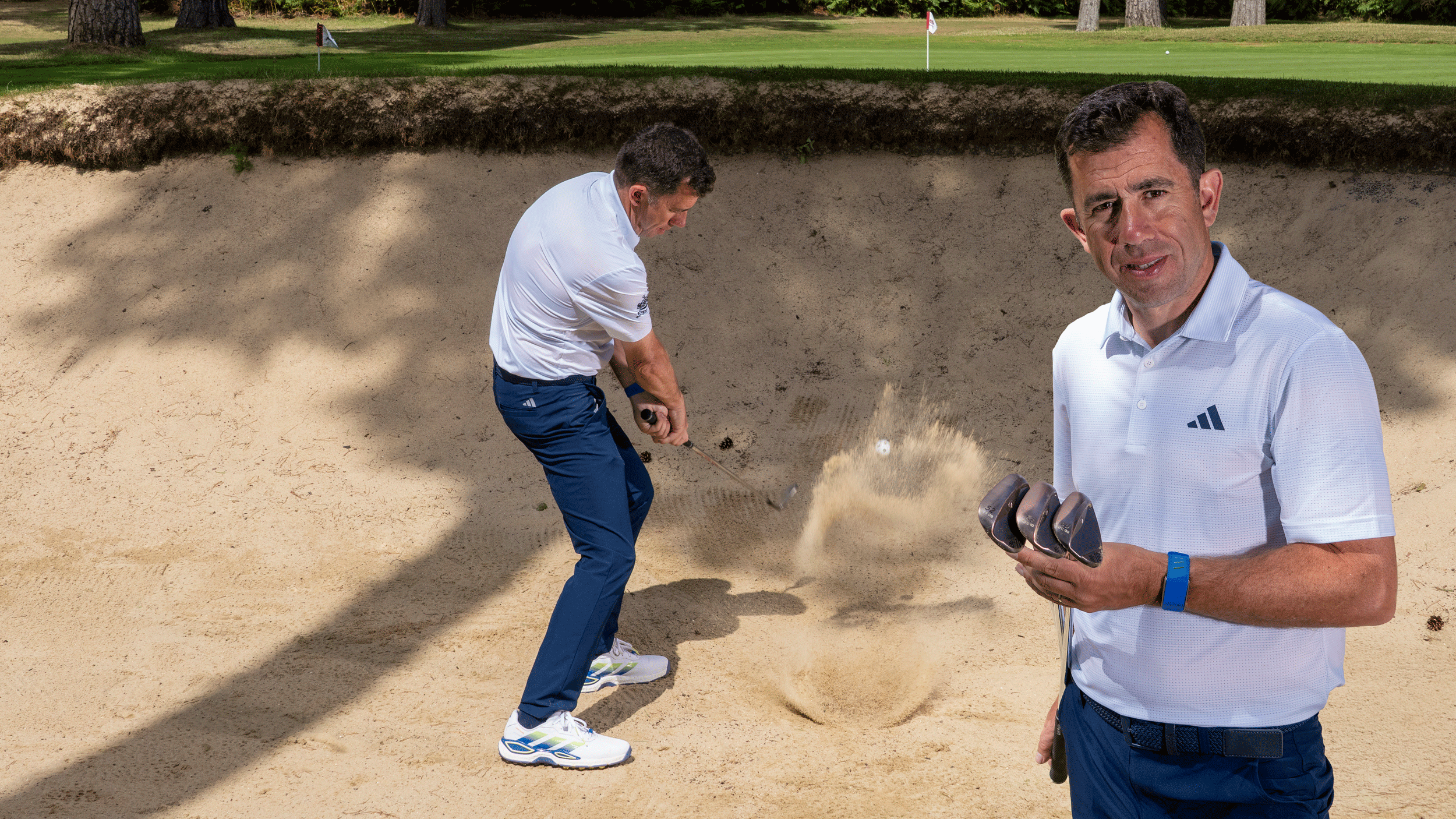
If I was having bunker problems on the golf course, short game guru Dan Grieve would be the first person I'd turn to for advice.
In this video and article, the world-class coach shares a superb short game clinic that aims to not only improve your bunker play, but also assist you in dialling in your distance control from the sand.
We recently bought you Dan Grieve's 5 best chipping drills, which is a great one-stop-shop for getting up-and-down from around the green, but the tips in this step-by-step guide can help you to become a sand saving superstar.
Dan Grieve has already fixed one amateurs short game in just 30 minutes - now it's your turn...
Dan Grieve's Formula For Perfect Bunker Shots
"The setup is the most important part to bunker play"
Dan Grieve, Golf Monthly Top 50 Coach
1. The Setup
We've got to make sure we get the basics right. A lot of golfers panic in the bunker, which can lead to a big weight shift and ultimately trying to hit it too hard.
That makes it very hard to control the low point of the swing and get the strike you desire when you're moving around that much.
Instead, I like a solid base. Address the ball with the same stance width as you would with driver, so wider than your shoulders, then have your trail foot slightly flared out.
In the video below, you will see my front foot is flared out around at 45°, which allows me to really push the lead knee over the foot.
When trying this yourself, feel as though you’ve got diagonal downward pressure where everything is moving down and through that lead foot.
The pelvis is forward, and if the lie has a nice bit of sand to it, you want to slightly reverse your shoulders. That allows you to splash it.
The variable really is what you do with your shoulders depending on the lie. If the bunker has very little sand in it, then you want to lean more into the shot over that lead side, which helps the club dig more into it. Again, the video will illustrate this for you.
Start with the ball position around one ball inside your lead heel and open the club face. It’s very important you don't grip it and then twist it; open the club face and then take the grip.
Also, make sure the shaft is more or less in line with the back of the ball. It’s important to get a good distance away from the ball, as that allows me to get my hands nice and low.
By having your hands almost between your knees, that puts lots of cupping in your lead wrist - which will help you hinge and release the club.
They're the setup basics which will allow you to use the ground well and hit the shot from a good platform to then execute the swing.
In the swing, it's important to do two things: you need to blend in a turn of the body with a hinge of the wrists.
When I play a bunker shot I am really looking to put some cup into the left wrist, as a right-handed golfer.
If I've done that correctly, the club face should look at my face. If the club face is looking down, I’ve likely arched my wrist; if I cup this wrist correctly, it's looking back at my face.
That's a really simple way of checking, but do it with an effective turn built in. I see some players who just pick it up, which isn’t going to produce the results you want, so you have to feel like you turn as well at the same time.
In the downswing, your right elbow should stay quite close to you and you release the club back to the original start position.
As you do that, the toe of the club will naturally square up. In the video, as I release the shaft, you can see I am not trying to hold onto the loft. The opposite, in fact - I am releasing the loft.
The toe releases and then the club face looks back at you. If you can just very simply concentrate on that ‘face-to-face’ position, with the right release and a bit of chest turn - you'll hit some top quality bunker shots.
2. Short-Range Bunker Shots
When it comes to distance control with bunker shots, there are some nuances you need to be aware of. Let’s start with a short bunker shot. The one I’ve given myself in the video above is quite tricky - on a down slope with only a 5-yard carry.
The first thing to consider is club selection. I've gone with my 60° because I need to get as much spin as possible. Also, when I'm trying to hit a short bunker shot, I'll go down the grip.
Remember to stand a little bit further away than a normal shot and really sit down into it to lower the hands. The lower you get, the more cupping you put in your wrist.
You can also open the face up a little bit more for this shot, which along with the other factors above makes it quite difficult to send this ball long.
My hands stay in a little box, which you can see in the video, so we're not traveling too much from side to side.
From there, I just make a normal swing; I’m not going to hit it too hard. Then, we can start to get controlled shots from difficult positions.

The technique for each shot is very similar, with just a few adjustments to control distance
3. Mid-Range Bunker Shots
We're now focusing on the mid-length bunker shot, which I’ve set to about 15 yards. We've done the 5-yard one, where my hands were really low and I really opened the club face.
I don't need to be as aggressive in terms of opening the face or lowering the hands quite so much for this shot. Ultimately, because we want the ball to go forward more, it doesn't necessarily need to go quite as high.
So, I've changed club and gone to my 56-degree. As you can see in the video, I'm now at my regular hand position - still low, but not as low as I used them for the really short shot.
I need a slightly longer swing this time, and a little more speed with the chest. I start to think about controlling the distance of the shot with the speed of my chest. Basically, how hard I'm working the sand will dictate how far I start to hit the shot.
I would probably struggle to get that with the 60-degree to the pin I’ve selected. So, if you're a player using your 60 everywhere for all-length bunker shots, I think this will really help you to improve your distance control.

Don't fall into the trap of hitting every bunker shot with a 60 degree wedge - changing lofts will help you to access different pins
4. Long-Range Bunker Shots
Right, on to the long bunker shot - the hardest shot in golf, so they say. Now, it is the hardest shot in golf if you're trying to attempt this with a really lofted club such as your 60 or 58; you would really have to play a world-class shot.
Sometimes, you've got to do that because you might have no green to work with. But in the situation outlined in the video, which I think is generally what we get on a long bunker shot, we have green to work with. Again, let’s go down in loft.
We used a 60 for the short one, a 56 for the mid, and now I’ve got a 52. A 50 or 52 would also be an excellent choice if you carry either of those lofts.
This time, again, don't open the face quite as much. We're progressively squaring that face, so it's still a touch open, but we still want to use the bounce.
You can also stand a little bit closer now. The wrist angle isn't quite as pronounced; it's going to help me produce a bit more energy moving forward and less of the sand working upwards helps me hit a long bunker shot.
This requires more speed in the chest rotation. Focus again on the setup we worked hard on at the beginning, really putting the pressure down.
That’s key for this one because I do think subconsciously when you've got a long bunker shot, players lose the ground too much because they're trying to get the ball out to that long pin.
The hips go and then you can hit the ball first. We've all done that, and it's just game over, isn't it? Really root your feet down, get the right club in your hand and just make a regular swing - it’s about trusting the loft of the club to get the ball there.
What if the ball is on an upslope in the bunker?
An upslope in the bunker requires another version of playing the shot outlined above. If you want the ball to run a bit more, use even less loft. In the video, I went for a 9-iron, believe it or not. Now, the lip - I know it looks quite tall.
To play the shot, grip down almost to the bottom. It’s less about making drastic changes and more about adjusting the loft and the grip on the club.
