

It’s one of the hottest trends in the equipment world, certainly when it comes to drivers. Even if you haven’t specifically been on the lookout for a new model, you’ll have heard about the extra playability that’s been unlocked through the development of 10K forgiveness.
Often, the number in the name of a new driver simply signifies the next iteration. In the case of 10K, that number represents a key piece of technology, one that is helping many golfers hit the ball further and straighter than ever before.
What Does 10K Mean?
It’s a good question to ask senior engineer Caleb Kroloff, Director of Woods R&D at PXG, given that the brand released its first 10K driver at the back end of last year.
“10K is where a driver has a combined MOI value of 10,000 g-cm² or more,” Kroloff starts. “It’s the combination of heel-to-toe and top-to-bottom Moment of Inertia.”
Next question(s): (1) What is Moment of Inertia, and (2) Where does the number 10,000 come from?
Firstly, MOI can be defined as an object’s resistance to changes in its rotational motion. “We’re talking about forgiveness, with MOI something of an interchangeable word with golf’s ‘F-word’,” Kroloff explains.
In the game of golf, MOI is our friend. The greater the MOI number (expressed in grams per centimeter squared), the more resistant the club is to twisting along a given axis.

The PXG Lightning Max 10K+ driver is built around the principle of increasing forgiveness (MOI) and efficiency through its Frequency Tuned Face technology
If you’re a real tech junkie, you might know the significance of the number 5,900 - that was the limit that the USGA and R&A set for toe-to-heel MOI.
Typically, golf companies start out with a heel-to-toe value (y-axis) at or close to that single axis limit of 5,900 g-cm², and the rest comes from the x-axis (top-to-bottom) measurements.
Here’s the twist, excuse the pun: by combining the MOI measurements of multiple axes, manufacturers can claim to have numbers greater than 5,900 without breaking any rules.
For example, with a maximum allowable y-axis of 5,900 and an x-axis value of 4,100, you have your 10,000 (10K) total MOI.
Should I Get A 10K Driver?
Let’s be honest, we don’t find the center of the clubface every time - not even tour professionals do. When we miss the sweetspot, the driver twists and deflects.
Why wouldn’t you want a driver that offers greater stability at impact and helps you to hit the ball further and straighter?

A massive 84% larger carbon fiber sole area compared to the Black Ops pushes discretionary weight to the extreme perimeter for maximum forgiveness
With 10K models, the low, back center of gravity that aids forgiveness tends to result in higher launch angles and higher spin rates, so you could be forgiven for thinking PXG’s Lightning Max 10K+ driver is going to be ‘spinny’.
However, Kroloff says a lot of golfers end up surprised by this “remarkably low spin, fast 10K model”.
So impactful is the technology that 10K drivers are even making their way onto tour and into the bags of the likes of Jake Knapp and Patrick Fishburn.
“We’ve seen a few players experimenting with the Lightning 10K and bouncing between the Max 10K and Tour Mid,” says Kroloff. “Eric Cole is another of our ambassadors who has recently switched from the Black Ops to the 10K model.
“There’s an assumption that tour players go straight into the Tour driver - that that’s designed for them, especially high-speed players. With 10K, some of our players are getting that forgiveness and stability without losing ball speed.”

Several PGA Tour players have put the PXG Lightning Max 10K driver in the bag
It dispels the myth that 10K drivers are purely for the improving golfer. Clearly, 10K technology has the potential to help a wide range of skill levels make significant improvements to their driving games.
So, is this type of driver one that could transform your game?
“A driver with greater MOI is going to want to twist less on mishits - it’s more stable at impact, so you’re going to have more energy transfer and less loss of speed when you don’t find the center of the clubface, resulting in more fairways and greater distance,” says Kroloff.
“I’d urge anyone who is suffering from a really wide miss - perhaps those who have lost their confidence on the tee and want that extra level of forgiveness - to try the PXG Lightning Max 10K.
“What I will add is that it’s important to get fit and find an experienced fitter who can walk you through the bounds of 10K forgiveness versus what you’re going to get from a more compact shape.”
If you're struggling off the tee, 10K certainly sounds like it's worth exploring.

-
 Biltmore Championship Asheville 2026 Prize Money Payout: What Will The Winner Earn?
A brand new event has kicked off the PGA Tour's FedExCup Fall campaign, and it's offering a unique prize money payout for the entire 2026 campaign
-
 How Much The Winning Caddie Makes At The BMW PGA Championship
The BMW PGA Championship is the DP World Tour’s flagship event, but how much does the winner’s caddie earn?


-
 The Expensive Golf Equipment That Is Really Worth Your Money
Equipment testers Dan Parker and Joe Ferguson talk about some of their favorite pricey products that fully justify the expense
-
 This Unique Launch Monitor Not Only Tells You What Happened During Your Swing, But Why
The days of launch monitors spitting out numbers and putting the onus on you to determine what they mean may be over courtesy of the NeoPace G10 Pro.
-
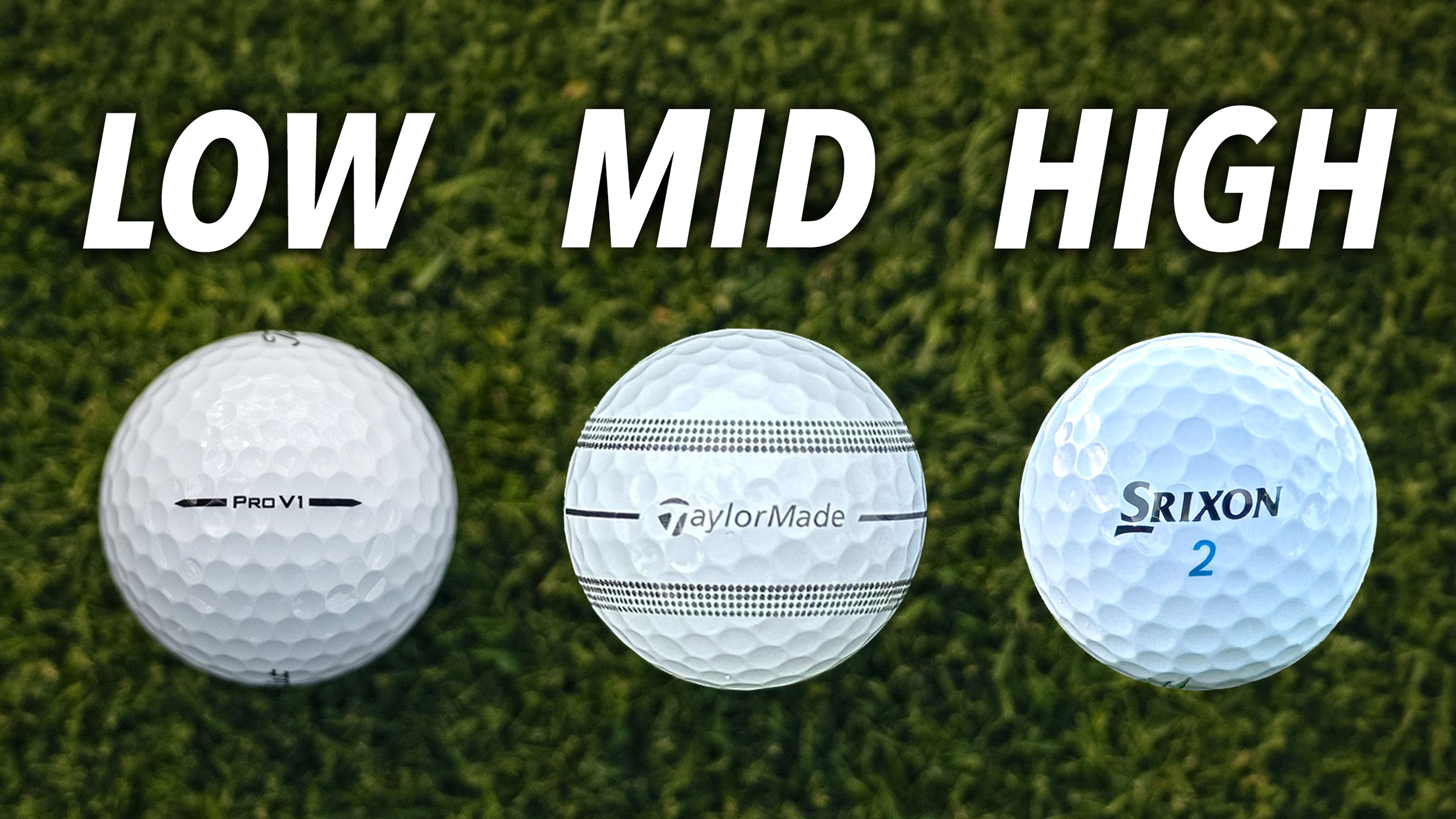 Are You Playing The Right Golf Ball? Our Experts List Their Preferred Options For Every Handicap Range
It's essential to play with a golf ball that's suitable for your game, so our team of gear gurus has put together a list of favourites in each category
2 Comments -
 This Unreleased Driver Is Chalking Up Massive Tour Wins... But When Can You Get It?
Major champions like Ryan Fox and Shane Lowry are putting Srixon's unreleased driver straight into play - here’s when full specs drop and when you can get fitted…
-
 Golf Monthly Forum Debate: Should You Try Direct-to-Consumer Clubs?
The attractive prices mean they are growing in popularity but what are the drawbacks and are they right for your bag?
3 Comments -
 Irons Vs Hybrids Vs Fairway Woods Vs Wedges – How Many Of Each Should You Carry?
Are you struggling to work out how many of each type of club you should carry? There are basic principles to keep in mind
-
 Switching Into Ping's Scottsdale TEC Ally Blue Onset Helped Wyndham Clark Lead the 2026 Tour Putting Stats... Here's How It Happened
With three victories in 2026 including a major championship, Wyndham Clark has enjoyed a stellar season thanks to his switch into the Ping Scottsdale TEC Ally Blue Onset putter
-
 Golf Monthly Forum Debate: Is The Mini Driver Finally Replacing The 3-Wood For Mid-Handicappers?
The Golf Monthly forum has had its say on the well-known debate around this crucial spot in the top end of the bag. Will it help sway your final decision?


