






Sponsored by

Why We’re Only at the Beginning of Golf’s 3D Printing Revolution
Why additive manufacturing is the next frontier in golf club performance, mass customization, and discretionary weight.


Historically, iron manufacturing has been a story of "subtraction" and "shaping." We take a block of steel and hammer it (forging) or melt it into a mold (casting). It’s a world somewhat governed by the physical limits of what a forging press or a ceramic shell can do.
But, as we stand in 2026, I firmly believe that these old ways are about to be replaced by the laser. While the industry has flirted with 3D printing for years - mostly in limited-run putters and prototypes - the release of full-scale iron lineups like Cobra’s 3DP series (featuring the MB, Tour, and X models) signals that the revolution hasn't just arrived; it's finally found its swing.

I’ve waxed lyrical about these irons in my reviews already, yet the truth is that we are still only on the first tee.
The "eureka" moment for 3D printing - or additive manufacturing - is the internal lattice. Traditionally, if you wanted a forgiving iron, you needed a big, chunky head to move weight to the perimeter. 3D printing throws that rulebook out of the window.

By using Direct Metal Laser Sintering (DMLS), engineers can "print" a clubhead from stainless steel powder, layer by microscopic layer. This allows for an internal structure resembling a complex honeycomb or a spiderweb. These lattice structures are incredibly structurally strong, but the key is that they are extraordinarily light, which provides club designers with their favorite thing - discretionary weight to precisely position for optimal performance.
The result? In the Cobra 3DP MB irons currently being gamed by pros like Max Homa, engineers have been able to remove enough internal mass to reposition up to 100g of tungsten into the heel and toe. What you end up with is a club that has the sleek, compact profile of a blade but the Moment of Inertia (MOI) and forgiveness of a game-improvement cavity back.

Max Homa has been using 3D printed irons since his switch to Cobra Golf
It is, quite literally, the "Holy Grail" of club design.
So, why are we only at the beginning? Because right now, 3D printing is largely being used to make better versions of "standard" clubs. To me, the real revolution lies in mass customization.
Currently, "custom fitting" usually means a specialized shaft and a tweak to the lie angle. In the near future, 3D printing will allow for a bespoke head designed specifically for your strike pattern.
For example, if you consistently strike the ball toward the toe, a computer could redesign the internal lattice of your specific set to move the Center of Gravity (CG) to compensate. Don't like the "click" of a modern iron? The lattice can be adjusted to vibrate at a frequency that matches the "thud" you prefer.

I believe we are moving toward a world where "stock" clubs are a relic of the past. Your local fitting center won't just order a set; they’ll send a digital file to a printer, and your unique irons will be born from a bed of metal powder.
Of course, every revolution has its friction. The biggest barrier remains cost. A set of 3D-printed irons in 2026 still commands a premium - often upwards of $2,000 to $3,000.
However, as printing speeds increase and the cost of metal powders drops, we will see this tech trickle down to the mid-range market. We are also seeing the early stages of 3D-printed polymers in drivers and woods to further optimize technology beyond what traditional stamping can achieve.

The 3DP MB irons have some of the best profiles I have ever seen on a set of irons
In my opinion, we are about to witness the most significant shift in equipment since the move from persimmon to metal. 3D printing isn't just a new way to make clubs; it’s a way to make clubs that were previously physically impossible.
When you see a pro like Homa striping a 3D-printed iron on TV, remember: you’re not just looking at a new club. You’re looking at the prototype for how every golfer will buy equipment a decade from now. The "Laser Era" is here, and it's just getting warmed up.

-
 6 Tour Players To Win With Broomstick Putters In 2026
Following on from Eugenio Chacarra's success this season, as well as multiple other players, we've taken a look at how many broomstick putters have earned wins in 2026
2 Comments -
 This Is Easily My Favourite Golfing Island In The Caribbean
Rob Smith returns to one of his very favourite golfing destinations, the Dominican Republic – set in the beautiful, glittering Caribbean Sea...


-
 3 Gear Changes That Helped Me Play My Best Golf In 2026 (As A High-Handicapper)
In 2026, I've focused more on the gear and tech that could help me finally shake my high-handicapper status - these three changes could help you too...
-
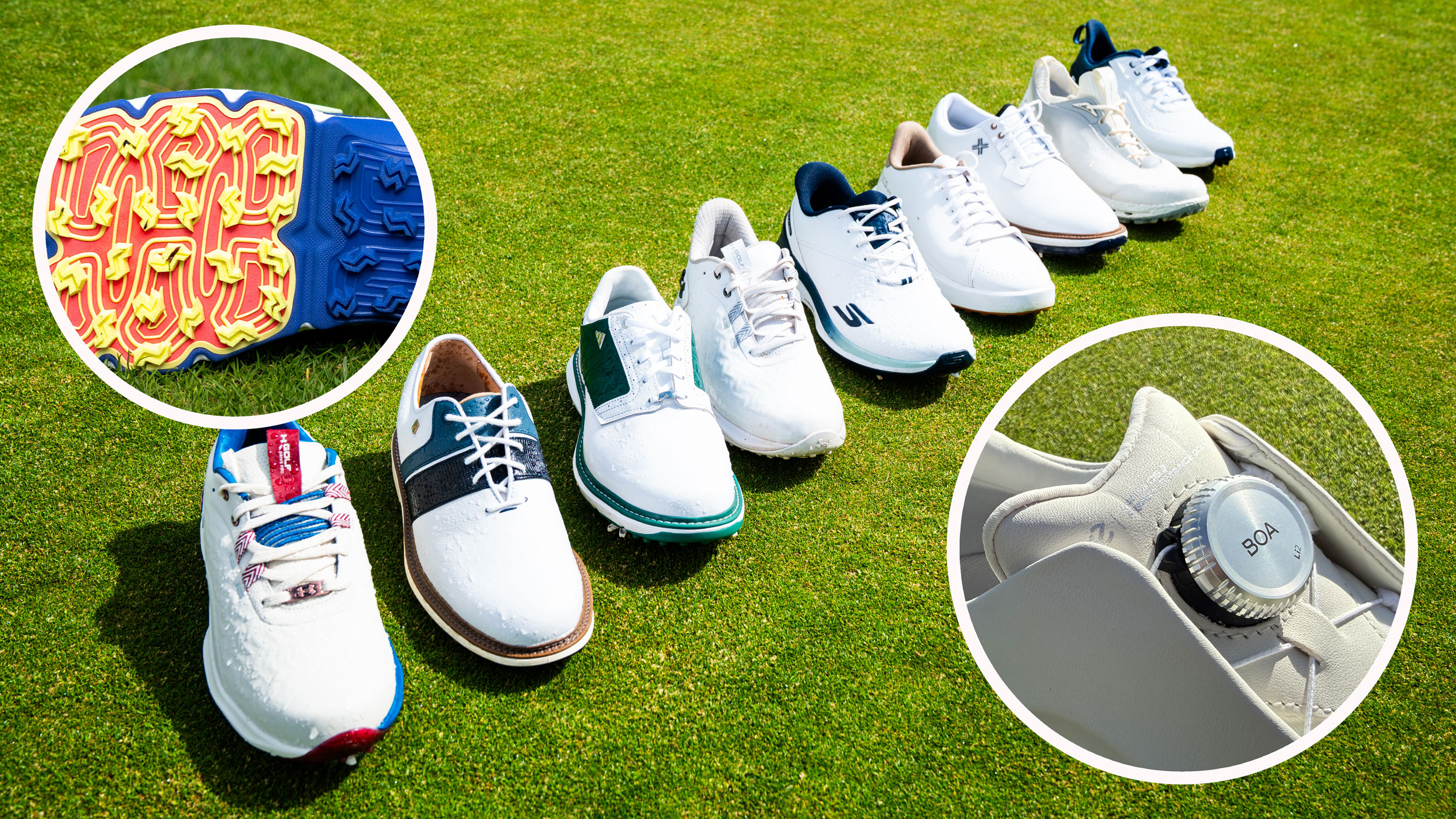 Spiked, Spikeless And Slip-Ins: The Pros And Cons Of Every Type Of Golf Shoe
With such a wide range of options, we highlight the pluses and minuses of the various shoe styles on the market
-
 I Asked Our New AI Gear Finder To Recommend My Optimal Golf Ball (And Shot My Best Round In Months)
I've always been a 'play whatever you can get' kind of guy, but when our new product finder recommended my optimal golf ball I had to give it a try...
-
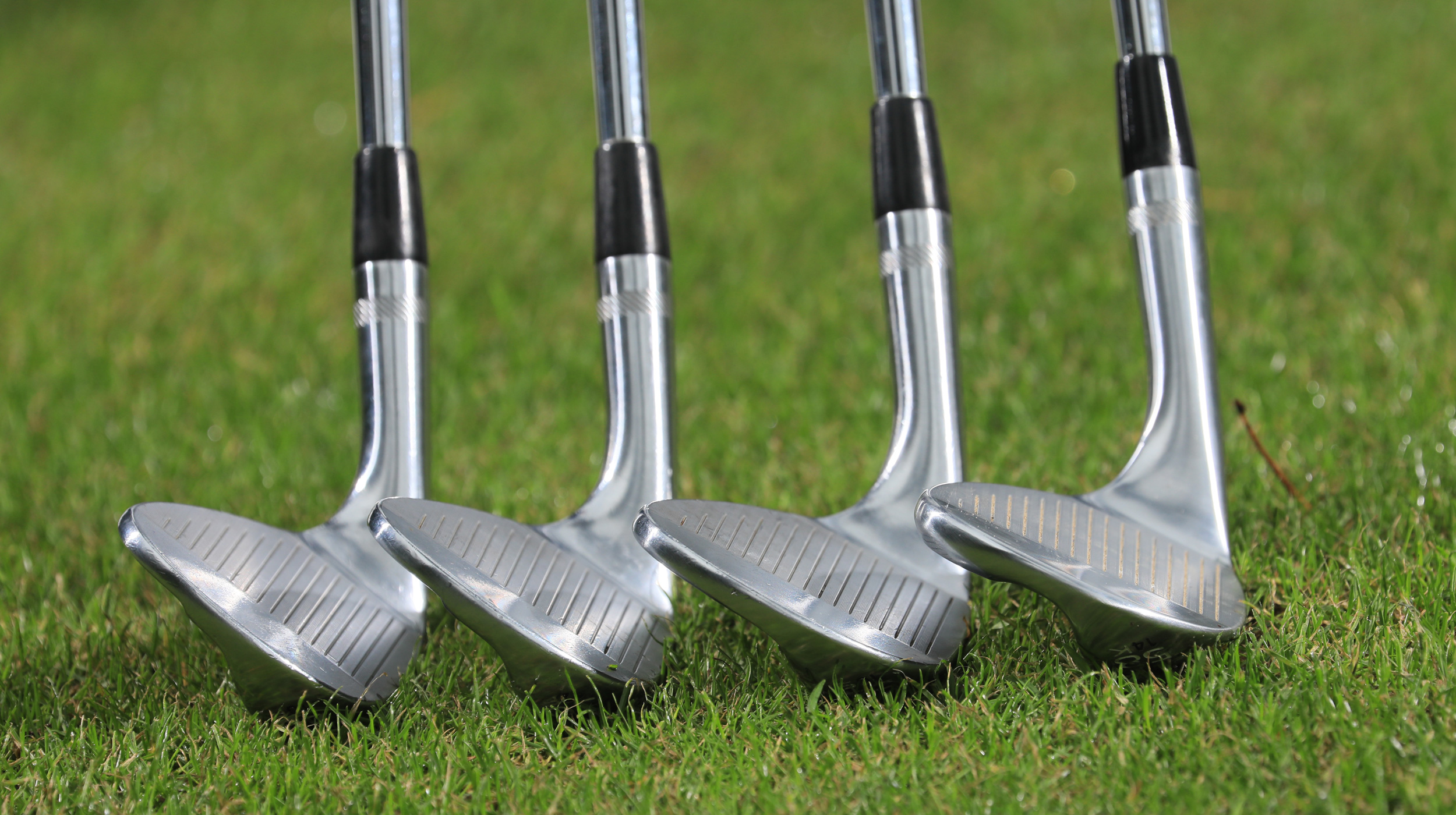 The Best Wedges For Every Type Of Playing Surface
Some wedges will perform better in certain situations than others. Do you have the right ones?
-
 Are Your Iron Shafts Too Heavy? The Small Gear Change That Saved This 8 -Handicapper's Game
In my experience, up to 70% of golfers play iron shafts that are too heavy - here is how one simple gear change completely transformed a hapless 8-handicapper's game...
-
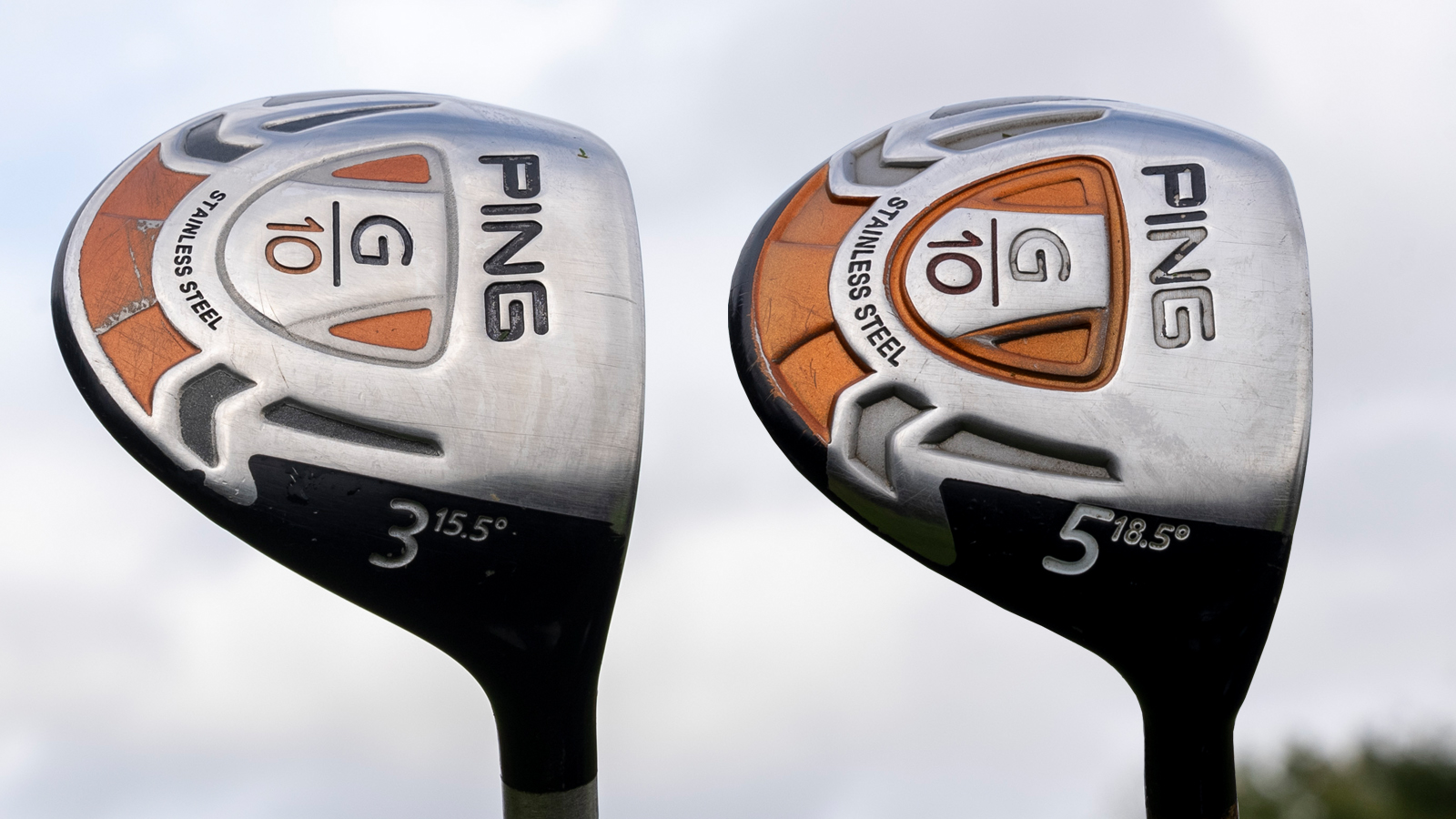 Counterfeit Golf Equipment Is Everywhere. How Do You Spot Fake Gear?
There’s an increasing amount of fake golf equipment in circulation. How do you spot the counterfeits to avoid being scammed?
-
 Don't Let Mobility Slow Your Swing: Meet the AI Exoskeleton Built for Golf
The aches and pains some golfers experience walking 18 holes of golf may be a thing of the past courtesy of Hypershell's leading exoskeletons.
-
 Every Item All Golfers Need In Their Bag (And Some They Don’t!)
What do you really need when you head out for a round of golf? We give you a list of the essentials… and some things you could do without
5 Comments


