Sponsored by

I Got Fitted For A Putter And Golf Ball At The Same Time... The Results Blew Me Away
A putter and golf ball change can help you save a significant number of shots on the course so I got fitted for both by TaylorMade to see how they could help my game


TaylorMade's Spider range of putters has dominated on the PGA Tour throughout 2026.
Not only did it claim five of the first six titles on the circuit, but both Rory McIlroy and Aaron Rai used a Spider model to earn their Major triumphs at The Masters and PGA Championship respectively.
These putters are becoming increasingly popular among the pros, which was why I was excited to get my hands on one for myself via a putter and golf ball fitting with TaylorMade... something that ended with me completely rethinking my style and routine on the greens.

To begin with, TaylorMade's putter range features multiple models, ranging from the most popular versions like the Spider Tour and Tour X, all the way to the zero-torque 5K ZT.
Putting is an area of my game that I regard as strong and yet since 2018, I've had a Cleveland TFI 2135 Satin Cero putter in the bag... So I was hopeful the Spider range could take my putting prowess to a new level.
Thankfully, under the watchful eye of fitter, Stuart Gauld, we were able to deduce which TaylorMade putter was most likely to suit my game relatively quickly, as we put the Tour and Tour X into action.
When wielding a putter, I find it's a very personal relationship. Some will like the looks and feel of one model, while others will opt for something more performance based and disregard the visuals as long as it gets the ball in the hole.
For me, all three models I tried looked and sat excellently at address, meaning it came down to the alignment (more on that later), and the different neck options available.
These were crucial factors as, out of the three options, one would match up to the swing path of my stroke and how much arc I create.

"The putter neck options are based on how much arc they create during the stroke," explained Gauld. "We talk about opening and closing the door, so the S bend is a very traditional, face-balanced putter and, in theory, it will go straight back and straight through.
"From there, we have the now renowned Scottie Scheffler neck, which is a plumber's neck. That arcs a little bit more. Then there's the Rory (McIlroy) neck, which is the small slant, which will arc a lot more."
In truth, it was more the head and neck options I was fixated on within testing. I know that I like the feel of a shorter putter, as it gets me over the ball more, and I know that I like a thicker grip as it keeps my hands more neutral and just feels more comfortable.
These factors were a given and, after finding out the small slant was the club for me, it was time to address the alignment, not just on the putter, but on the golf ball as well.

This is an area where TaylorMade has invested heavily over the last few years, via the addition of the Striped versions of the TP5, TP5x and Tour Response, as well as the Pix pattern on the TP5 range.
I've always sat on the fence when it comes to the alignment argument. Some golfers opt for a line to help with their start line, while some use a stripe, although some don't bother at all. To me, it varies how I'm feeling on the day. I'll sometimes use nothing, while other days I'll have a thick black line on the golf ball.
That's one main reason why I was excited to go one step further than just a putter fitting, as a golf ball is one of the most important but often overlooked areas when it comes to golf.
You want a golf ball that not only performs, but looks good at address and gives you confidence. Alignment aids are designed to help as much as possible, which is why I was very happy to see the result of my golf ball fitting, so much so I've actually implemented it into my own game.

Not only does the TP5 Stripe feature a 360° ClearPath Alignment, but also a performance dot called 'Quiet Eye' that made me concentrate on one particular area.
Focusing on this dot allowed me to make the stroke more naturally and, consequently, meant my start lines were consistent. If I missed a putt, it was down to my green reading or pace, not my stroke.
"The alignment cues on the ball, along with the alignment aid on the putter, is our key," explained Gauld. "When everything is lined up, from a fitting point, we are able to deduce whether it's you or the putter...
"The crucial thing, though, is we use the ball you use. Whatever ball you use, it's important that we use that ball in the fitting. The compression and feel of golf balls is different, so they're going to react differently off the putter face."
Because of the fitting, I have started using the TP5 Stripe more in my set-up, especially when I'm practicing on the putting green, as it really helps me work on alignment, start line and routine, three key aspects to help shoot lower scores.

-
 'I'm A Little Frustrated With Myself' - Angela Stanford Self-Critical After Admitting Bemusement Over Course Set-Up
The Team USA Solheim Cup captain admitted she was surprised by the speed of the greens at Bernardus Golf after her side’s 15-13 defeat
-
 Former LIV Golfer Wins First Title Since Relegation To Boost DP World Tour Card Hopes
Frederik Kjettrup has won the HotelPlanner Tour's English Trophy 13 months after being relegated from LIV Golf


-
 Golf Monthly Forum Debate: Should You Try Direct-to-Consumer Clubs?
The attractive prices mean they are growing in popularity but what are the drawbacks and are they right for your bag?
3 Comments -
 Irons Vs Hybrids Vs Fairway Woods Vs Wedges – How Many Of Each Should You Carry?
Are you struggling to work out how many of each type of club you should carry? There are basic principles to keep in mind
-
 Switching Into Ping's Scottsdale TEC Ally Blue Onset Helped Wyndham Clark Lead the 2026 Tour Putting Stats... Here's How It Happened
With three victories in 2026 including a major championship, Wyndham Clark has enjoyed a stellar season thanks to his switch into the Ping Scottsdale TEC Ally Blue Onset putter
-
 Golf Monthly Forum Debate: Is The Mini Driver Finally Replacing The 3-Wood For Mid-Handicappers?
The Golf Monthly forum has had its say on the well-known debate around this crucial spot in the top end of the bag. Will it help sway your final decision?
-
 The 9 Oldest Clubs The Golf Monthly Team Still Use Today
We all love modern technology, but there are some GM team members who haven't been able to replace certain trusty clubs...
4 Comments -
 The 7 Most Important Innovations In The History Of Golf Equipment
Only a small number of innovations in the history of the sport can genuinely be regarded as 'game-changing' and we've narrowed it down to these...
5 Comments -
 Broomsticks, Blades And Modular Mallets: Has Golf Equipment Marketing Gotten Out Of Hand?
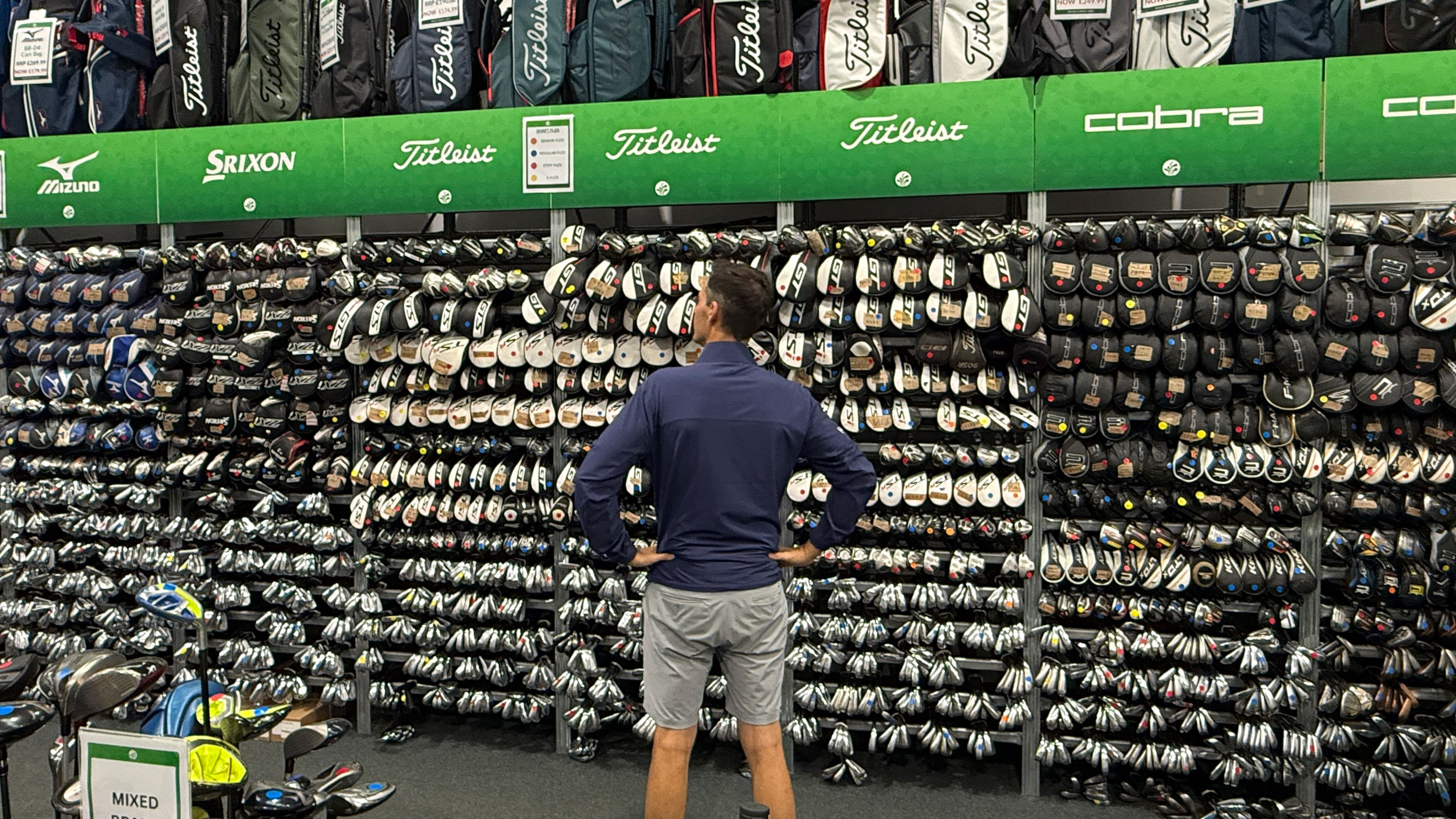
From three simple categories to an overwhelming maze of tech jargon, even Tour Pros can't keep up. It's time for major manufacturers to cut the fluff and embrace simple, honest messaging...
-
 Are You Overspending On Custom-Fitted Irons?
Dan and Joe open another can of worms in this episode of Kick Point, one in which we discuss the merits of half sets - plus we're joined by an absolute legend of the game
2 Comments


