



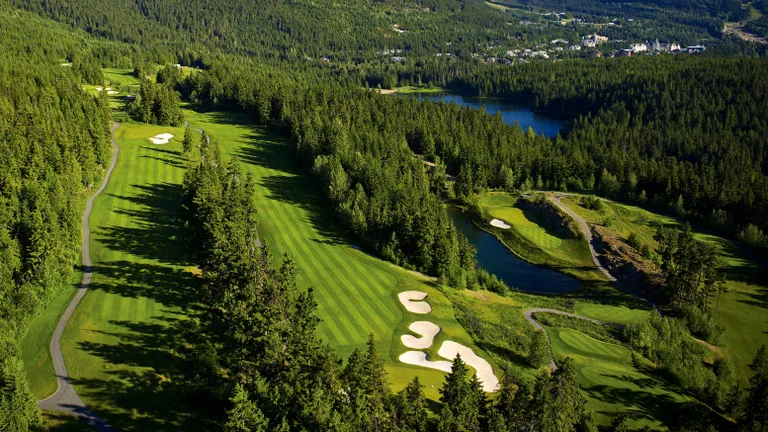


US Masters Trivia: How much do you know about the Masters?
Are you as clued up on your US Masters trivia as you think? Well, here are Golf Monthly's top 25 things you may or may not know about the Masters golf tournament in Augusta

US Masters Trivia - 25 facts you may or may not know about the US Masters golf tournament, held at the Augusta National Golf Club in Georgia
1. If you win the US Masters Tournament, then you receive a lifetime exemption into the tournament.
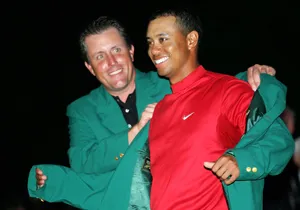
2. Jack Nicklaus is the only person to ever put the green jacket on himself. He did this after becoming the first person to win back-to-back titles in 1966. Since then consecutive winners Nick Faldo and Tiger Woods have received their jackets from the chairman.
3. Magnolia Lane is 330 yards long and extends from the entrance gate to the Clubhouse. There are 61 magnolia trees lining the road, which date back to the late 1850's. It was paved for the first time in 1947.
4. Claude Harmon, in 1968, and Toshi Izawa, in 2002, are the only two players to have had two holes-in-one in the same year during the famous Par 3 tournament. Ironically enough both of them did it on consecutive holes – 4 (Flowering Peach) and 5 (Magnolia) for Harmon and 5 (Magnolia) and 6 (Juniper) for Izawa.
5. Augusta used to be played in a different order of holes until 1935 when the nines were reversed.
6. In 2004 Mike Weir was the first Canadian to win a Major and the first left-hander to win the US Masters.
Subscribe to the Golf Monthly newsletter to stay up to date with all the latest tour news, equipment news, reviews, head-to-heads and buyer’s guides from our team of experienced experts.
7. 2007 ended a string of nine straight years that the US Masters tournament was delayed at some point due to inclement weather.
8. The Champions Dinner is organised every year by the defending champion for all the other former winners. He makes a speech and, more importantly, chooses the menu. The meal is then served in the club dining room. In 2006, the 2005 champion, Tiger Woods, ordered Mexican salad, fajitas and rice with apple pie for dessert. The tradition goes back to 1952, when Ben Hogan was the inaugural host.
9. The site that the Augusta National Golf Club US Masters course occupies used to be a nursery and is home to 80,000 plants, of which there are 350 different species.
10. Everyone remembers Greg Norman surrendering a six-shot lead to Nick Faldo on the final day in 1996, but US Masters history is heavily loaded with tales of final-day stumbles. For example, 14 years earlier Craig Stadler had a six-stroke lead as he stood on the 10th tee – yet still needed a play-off to secure the title.
11. The Par-3 Championship has been staged on the eve of the US Masters every year since 1960. The nine-hole par-3 course opened in 1959 and has a course record of 20 strokes, held by Art Wall and Gay Brewer. Nobody has ever won the Par-3/Masters "double" in the same year. Raymond Floyd was defeated by Nick Faldo in a play-off for the 1990 US Masters – five days after winning the Par-3 Championship. He is the closest anyone has ever come to the double.
12 Six players have birdied the final hole (Holly) to win the tournament: Art Wall (1959), Arnold Palmer ('60), Gary Player ('78), Sandy Lyle ('88), Mark O'Meara ('98) and Phil Mickelson ('04).

In July 2023, Neil became just the 9th editor in Golf Monthly's 112-year history. Originally working with the best coaches in the UK to produce instruction content, he went on to become a feature writer interviewing many of the biggest names in the game including Tiger Woods, Seve Ballesteros, Rory McIlroy and Arnold Palmer.
A 5-handicap golfer, Neil is a club member who takes a keen interest in the health of the game at grassroots level. You’ll often now find him writing about club-related issues such as WHS, membership retention and how best to bridge the gap between the range and the course.