






Accidentally Moved Your Ball? Here's What Happens Next...
In this video, GM Rules Guru Jezz Ellwood explains what happens if you accidentally move your golf ball.

In this video, GM Rules Guru Jezz Ellwood explains what happens if you accidentally move your golf ball.
Accidentally Moved Your Ball? Here's What Happens Next...
You have accidentally moved your ball but what happens next under the Rules of Golf? The answer to this question depends on what caused the ball to move and whether or not you are on the putting green. Let’s explain.
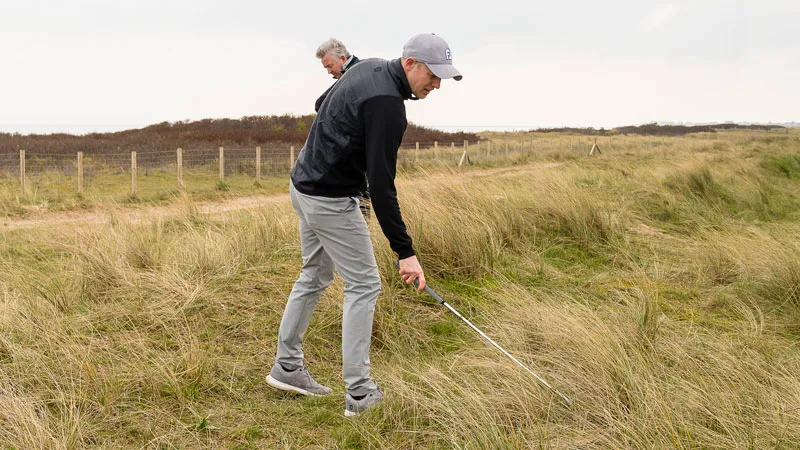
The first scenario to look at is when you, the player, accidentally cause your ball to move while searching for it.
This is one of the Rules that changed when The R&A and USGA released the 2019 revisions and, thankfully, there is now no penalty as long as you replace the ball to its original position. Of course, you will need to estimate that spot to the best of your ability if you cannot be 100% sure.
Now imagine that your ball is sat up on the fairway or in the rough and, as you put your club behind the ball, it rolls backwards. Unfortunately, in this scenario - even though you accidentally moved your ball - you will face a penalty.
In the general area, bunkers and penalty areas, if you, your caddie or your playing partner accidentally cause the ball to move, you will get a one-shot penalty and you must replace the ball in its original position.
Related: 7 Simple Golf Rules Mistakes

What happens if natural forces cause the ball to move? Before you address the ball, things such as wind or water can cause a ball at rest to move and if they do, you will just need to play it from where it then comes to rest without penalty.
The only exception to this is on the putting green after you have marked the ball - in that scenario, the marking of the ball represents a kind of stopping point, and you can replace it where it was marked if natural forces then cause it to move.
If you hadn’t marked your ball on the putting green, though, you would need to play it from where it then comes to rest after moving – something to think about on windy days.
If somebody other than you, your caddie or your partner has caused the ball to move, there is no penalty, but again, you will need to replace the ball in its original position.
Related: 8 Rules Golfers Break Without Realising

What happens if you accidentally cause your ball or ball-marker to move on the putting green? This can often happen in the act of marking or even addressing the ball on greens where the grass is much shorter than on the rest of the golf course.
If this happens to you, there is no penalty but, of course, you will need to replace the ball or ball-marker in its original position, estimating it if you can’t be 100% sure.
Likewise, and as previously mentioned, if you mark the ball and then replace it and the wind causes it to move, you must simply return it to its previously marked position without penalty.
For more rules content check out the Golf Monthly website.
