Masters facts and figures: Augusta shockers
Augusta has witnessed some of the best performances in golf's history, but here are some of the least-flattering stats in Masters history...

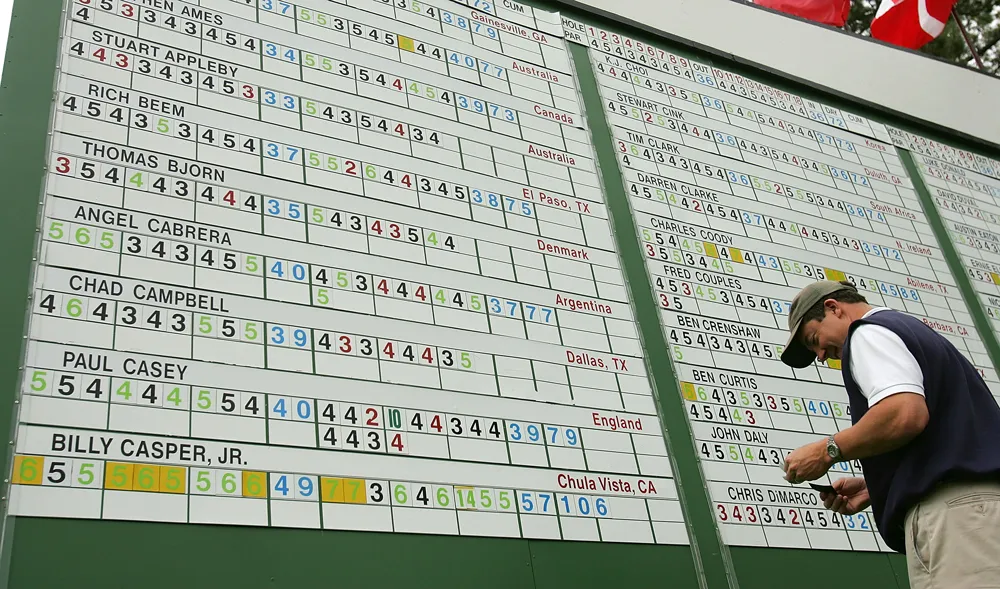
Augusta National has witnessed some of the best performances in golf's history, but here are some of the least-flattering since the inception of the Masters
Some of the Masters facts and figures that get the attention for all the wrong reasons...
Tom Weiskopf took 13 strokes to complete the par-3 12th in 1980 – an amazing 10-over-par on one hole and the highest official over-par score in Masters history.
Highest ever round: 106 - Billy Casper, first round, 2005 (unofficial). Before the even, Casper was sent a letter by Masters officials asking him to stop playing (he had that right as a past captain). His 106 – which he never turned in a scorecard for – included a 14 at the par-3 16th.
Highest cut: 154 (10-over-par) in 1982
Only 34 players recorded par-or-better scores in 1956. In the first round in 1936, the second round in 1954 and the fourth round in 1956, only two players notched par-or-better scores.
The highest composite score - taken from the highest Thursday, Friday, Saturday and Sunday scores in Masters history – is 372, or 82-over-par.
Subscribe to the Golf Monthly newsletter to stay up to date with all the latest tour news, equipment news, reviews, head-to-heads and buyer’s guides from our team of experienced experts.
The highest-ever average round score came during the first round in 1936, where 52 players averaged 78.60
Hole-by-hole – highest scores in Masters history
Hole 1, par 4: 8 (four players) Hole 2, par 5: 10 (two players)
Hole 3, par 4: 8 (Douglas B. Clarke, 1980)
Hole 4, par 3: 8 (Henrik Stenson, 2011)
Hole 5, par 4: 8 (four players)
Hole 6, par 3: 7 (two players) – Jose Maria Olazabal played this hole in five-over-par in 1991 but still managed to claim his first of two Masters titles
Hole 7, par 4: 8 (two players)
Hole 8, par 5: 12 (Frank Walsh, 1935)
Hole 9, par 4: 8 (three players)
Worst possible cumulative front-nine score: 77 (41-over-par)
Hole 10, par 4: 9 (Danny Lee, 2009)
Hole 11, par 4: 9 (four players) Hole 12, par 3: 13 (Tom Weiskopf, 1980) Hole 13, par 5: 13 (“Tommy” Nakajima, 1978)
Hole 14, par 4: 8 (Nick Price, 1993)
Hole 15, par 5: 11 (three players)
Hole 16, par 3: 11 (Herman Barron, 1950)
Hole 17, par 4: 7 (17 players)
Hole 18, par 4: 8 (seven players)
Worst possible cumulative back-nine score: 89 (53-over-par)
Worst possible cumulative 18-hole score: 166 (94-over-par)
Click here for more Masters stats

In July 2023, Neil became just the 9th editor in Golf Monthly's 112-year history. Originally working with the best coaches in the UK to produce instruction content, he went on to become a feature writer interviewing many of the biggest names in the game including Tiger Woods, Seve Ballesteros, Rory McIlroy and Arnold Palmer.
A 5-handicap golfer, Neil is a club member who takes a keen interest in the health of the game at grassroots level. You’ll often now find him writing about club-related issues such as WHS, membership retention and how best to bridge the gap between the range and the course.