England - Blackpool
Flamboyant kitsch plus fine links golf in England's holiday capital

In the mid to late 19th century the British public began to head to the seaside for their holidays. These coastal breaks came about courtesy of an increase in the average wage, the introduction of Bank Holidays and, most importantly, the development of the railways.
Blackpool came to epitomise the commercialisation of the British seaside, its great tower (finished in 1894) a symbol of the increased wealth enjoyed by coastal towns. By the turn of the 20th century Blackpool had turned from a small fishing community into a bustling resort with a population of almost 50,000. Today this Lancashire town continues to be one of the foremost destinations for Britain's holiday-makers. Most visit for the Pleasure Beach, the music hall entertainment and the illuminations. Some, however, choose to travel to the Fylde Coast for a slightly less gaudy form of amusement - golf.
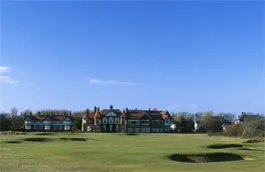
Having hosted the Open Championship on 10 occasions, Royal Lytham & St Annes is the most famous course in the vicinity, but its roots lie two miles up the coast at St Annes Old Links. When, in the 1890s, club members at St Annes felt that increased building work may threaten their course they made the decision to move south - as a result Royal Lytham & St Annes golf course was built.
St Annes Old Links survived, however, and it was quickly extended to 18 holes. In fact, it fast earned a reputation as a links of some quality. Over the years it has been a regular host for national competitions and since 1926 it has been a venue for Final Qualifying when the Open visits Lytham.
With fast-running fairways and quick, tricky greens this is a traditional seaside course full of character. Even the names on the card conjure thoughts of the past: holes like Sailor's Locker, Granny Fisher's and Keepers Trap recall characters gone but not forgotten. When playing a round at St Annes you feel you should put away the TaylorMade and reach for a hickory-shafted brassie instead.
Two miles north of Blackpool is Blackpool North Shore GC. Although the club was founded in 1904, it wasn't until 1920 that Harry Colt was employed to design a new course centred on Knowle Hill. Interestingly, Colt was hired ahead of James Braid, the other great British architect of the day, and the Englishman received a fee of just £200. This is another Open Qualifying venue and the course provides a stringent examination of your game, particularly in a stiff wind. Talking to the pro it emerged that the wind rarely drops below stiff so I prepared to hit some low, controlled punch shots. Well, I prepared to attempt them anyway.
After a gruelling battle against the wind and punishing rough, we headed into the old-style clubhouse for a Talbot Tower Burger. It's guaranteed to restore the energy levels.
Subscribe to the Golf Monthly newsletter to stay up to date with all the latest tour news, equipment news, reviews, head-to-heads and buyer’s guides from our team of experienced experts.
Rejuvenated we made our way back into town. A rare display of sense meant a ride on The Big One, Europe's tallest roller coaster, was vetoed. It looks incredibly fast and altogether too terrifying, certainly not a good idea following a Talbot Tower Burger. There is, of course, a surfeit of activities in Blackpool, too much for a single day. Catch one of the many shows, visit the Tower and Circus or just stroll along the promenade and soak up the sights and sounds. Surprisingly there's a less garish side to the town as well. Get away from the crowds with a visit to Grundy Art Gallery or relax by the lake in Stanley Park - pop along on a Sunday and you might hear some live jazz.
The last stop on our Lancashire golfing expedition was Fairhaven GC to the south of Blackpool. If James Braid was feeling persona non grata following North Shore's preference for Colt as designer, the members of Fairhaven rectified the situation when they commissioned the Scot to create their course in 1924.
Since then the layout has been updated by Dave Thomas, Peter Alliss and, more recently, links expert Donald Steel. The par at Fairhaven is an unusual 74 - there are six par 5s and all are reachable in two given the right wind conditions. This means there are numerous birdie opportunities, a fact admirably proved by Justin Leonard during Open Qualifying in 1996. The American set the course record with a 10-under-par round of 64.
One of the most noticeable things at Fairhaven is the tranquillity to be found here. Despite the course's proximity to urbanisation the only noise likely to disturb your backswing is the call of one of the many pheasants that amble around the course.
CONTACTS BOOK
Where to play
St Annes Old Links
t: 01253 723597
w: www.coastalgolf.co.uk
stats: par 72, SSS 72, 6,684 yards
Blackpool North Shore
t: 01253 352054
w: www.blackpoolnorthshoregolfclub.com
stats: par 71, SSS 71, 6,431 yards
Fairhaven
t: 01253 736741
w: www.fairhavengolfclub.co.uk
stats: par 74, SSS 73, 6,883 yards
Where to stay
The Paramount Imperial
t: 0870 1688833
w: www.paramount-hotels.co.uk
Right in the heart of the action on Blackpool's North Promenade, the Imperial offers a blend of old world grandeur and modern functionality.
The Hilton Blackpool
t: 01253 623434
w: www.hilton.co.uk/blackpool
Well-equipped four-star hotel with modern facilities including pool, sauna and steam room. Most bedrooms have a sea view.
The Pembroke Hotel
t: 01253 351306
w: www.pembrokehotel.com
Comfortable hotel with 11 rooms. Food is excellent. Very convenient for North Shore GC.
Off Course
Blackpool Pleasure Beach
Visit www.blackpoolpleasurebeach.com for further details.
Blackpool Tower & Circus
Open 10am to 5pm daily. Check for prices.
Grundy Art Gallery
Open 10am-5pm Mon-Sat. Free admission.

Fergus is Golf Monthly's resident expert on the history of the game and has written extensively on that subject. He has also worked with Golf Monthly to produce a podcast series. Called 18 Majors: The Golf History Show it offers new and in-depth perspectives on some of the most important moments in golf's long history. You can find all the details about it here.
Fergus is also a level-three qualified Rules official and referee.
He is a golf obsessive and 1-handicapper. Growing up in the North East of Scotland, golf runs through his veins.
Fergus once shanked a ball from just over Granny Clark's Wynd on the 18th of the Old Course that struck the St Andrews Golf Club and rebounded into the Valley of Sin, from where he saved par. Who says there's no golfing god?